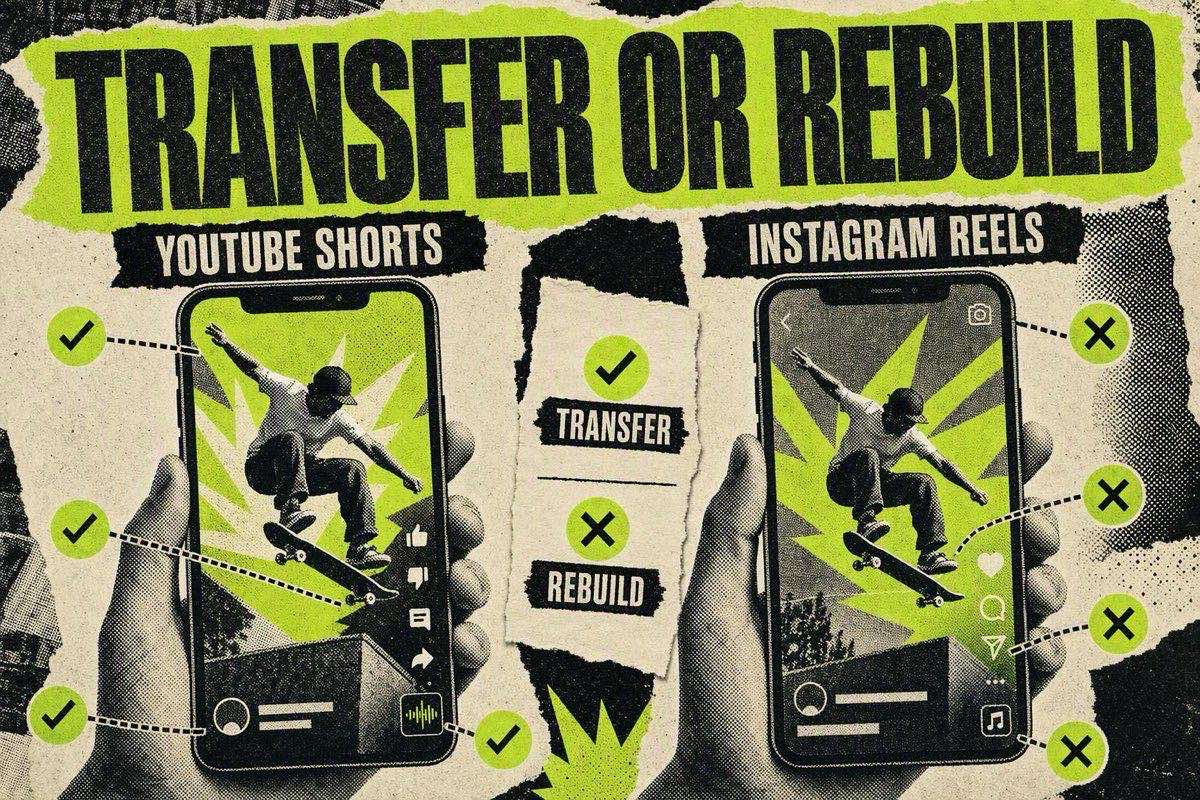
Yes, you can run the same video ad on YouTube Shorts and Instagram Reels, and you usually should. Both are 9:16, vertical, sound-on, hook-first feeds, so one master creative covers most of the work. What separates a clean cross-platform reuse from a lazy one is knowing which parts transfer untouched, which need a small tweak, and which you actually have to rebuild. This guide sorts every element into those three buckets so you can repurpose without either wasting effort or shipping a Reel that reads as an obvious import on Shorts.
For the underlying numbers, see the YouTube Shorts ad specs and Instagram Reels ad specs. This post is about the reuse decision.
Transfers one-to-one
These carry across untouched. Build them once.
- The 9:16 vertical frame. Both platforms are full-screen vertical. A single 9:16 master fits both placements natively.
- Sound-on design. Both feeds autoplay with audio and viewers expect it. A hook written to be heard works identically on both.
- The angle and the script body. The claim you are testing, the proof, the objection handling, and the CTA structure do not change by platform. A good angle is a good angle.
- Native-feel editing. Phone-shot framing, high early cut rate, delayed branding, and captions in a native style read as native on both feeds. The pattern-interrupt logic is the same.
- The testing discipline. One angle per cut, three to five opener variants on the same body, judged on retention. The six-step AI video ad workflow runs the same regardless of destination.
If most of your creative sits in this bucket, that is the point. The shared short-form format is the reason cross-platform reuse is cheap.
Transfers with a small tweak

These carry across, but a five-minute adjustment makes the reused ad noticeably stronger.
- Export resolution. Reels recommends 1440x2560; Shorts caps at 1080p, so 1080x1920. Master at the higher Reels resolution and export a 1080x1920 version for Shorts. Same footage, one export setting.
- Safe-zone text placement. The engagement rail and CTA overlays sit in slightly different positions on each platform. Text that clears the Reels UI can clip under the Shorts UI. Keep hook text, offer, and price in the middle band designed for the tighter of the two, and both survive.
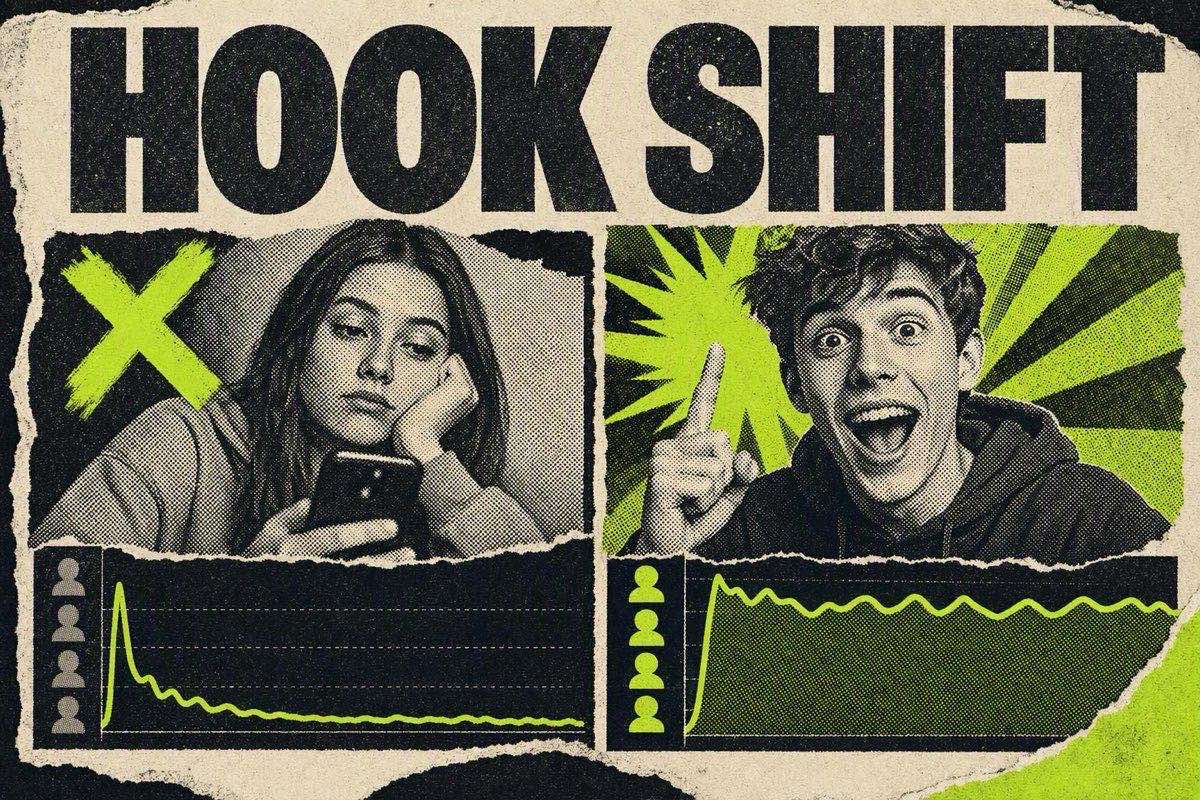
- The hook lean. Reels rewards pattern-interrupt and share-worthy openers; Shorts skews slightly toward value and curiosity because of YouTube's search-and-learn context. Test one alternate opener per platform rather than assuming the same first line wins on both. The full breakdown is in Shorts hooks vs Reels hooks.
- Length. Shorts allows up to 3 minutes and Reels up to 15, but neither ceiling is a target. Keep the cross-platform master short; the ceiling difference almost never matters in practice.
None of these require reshooting. They are adjustments to one asset, which is exactly why a systematic reuse process beats building twice.
What you have to rebuild
These do not transfer, and pretending they do is where cross-posting goes wrong.
- Licensed trending audio. Both platforms restrict licensed music in paid ads, and even where an organic track exists on one platform, it will not carry to a paid ad on the other. Recreate the pacing and structure a trending sound encourages using original or library audio, and the effect survives without the copyright risk.
- The buying and measurement setup. Shorts ads run through Google Ads (Demand Gen or Video campaigns); Reels ads run through Meta Ads Manager. Targeting, bidding, conversion tracking, and reporting are separate systems. The creative transfers, the campaign does not, and the platforms optimise on different signals, so read results per platform rather than pooling them.
- Platform-native references. Any on-screen reference to the platform itself ("comment below", a Reels-specific sticker look, an Instagram handle overlay) reads as an import when it lands on the other feed. Strip platform-specific UI references from a master meant to run on both.
- Audience assumptions. The same demographic behaves differently in a YouTube session than in an Instagram scroll. Do not assume an audience that converted on Reels is the same intent on Shorts. Treat the second platform as a genuine test, not a guaranteed copy of the first.
A repurposing checklist

Run any short-form ad through this before you cross-post:
- Exported a 1080x1920 version for Shorts alongside the 1440x2560 Reels master.
- Hook text and offer sit in the middle band, clear of both platforms' overlays.
- No licensed trending track, original or library audio only.
- No platform-specific UI references or on-screen handles baked in.
- One alternate opener queued to test the platform's hook lean.
- Separate campaigns built in Google Ads and Meta Ads Manager, with conversions tracked independently.
Six checks, no reshoot. That is the difference between reusing creative and diluting it.
FAQ
Can I use the same video for YouTube Shorts and Instagram Reels?
Yes. Both are 9:16, vertical, and sound-on, so one master creative works for both. Export a 1080x1920 version for Shorts alongside the 1440x2560 Reels master, keep text in the middle band clear of each platform's overlays, and avoid licensed music. The angle, script, and editing style transfer untouched.
What does not transfer between Shorts and Reels?
Licensed trending audio, the buying and tracking setup (Google Ads for Shorts, Meta Ads Manager for Reels), any platform-specific on-screen references, and audience assumptions. The creative transfers; the campaign, the audio rights, and the measurement do not.
Is it worth running ads on both Shorts and Reels?
Usually yes, because the incremental cost is small once you have a vertical master. The reuse is cheap and the audiences only partly overlap, so a creative that works on one is worth testing on the other. Just build separate campaigns and judge each on its own platform's signal rather than pooling the results.
Should I change the hook when moving a Reel to Shorts?
Test it rather than assume. Reels leans toward pattern-interrupt and share-worthy openers; Shorts leans slightly toward value and curiosity. Keep the same body and swap only the opening line to match each platform's lean, then let retention data pick the winner. See Shorts hooks vs Reels hooks.
One vertical, sound-on master covers most of both platforms. The wins come from the small tweaks and knowing what not to reuse. Generate opener variants with the free AI hook generator, get the specs right with the YouTube Shorts and Reels guides, and get one new winning ad breakdown in your inbox every week with the HookAds newsletter.
The AI Ad-Making Kit
$99Make hyperreal AI video and image ads for any brand, with free AI tools. No camera, no agency.
- 10 modules
- 300+ hooks
- 500+ prompts
Canva ad templates, free.
Proven D2C ad layouts. Swap in your product, export, launch.
Browse templates →Want to act on what you just read?
Browse 3,400+ free, Canva-ready ad templates sorted by industry. One click to open, five minutes to customise.
Browse Free Templates