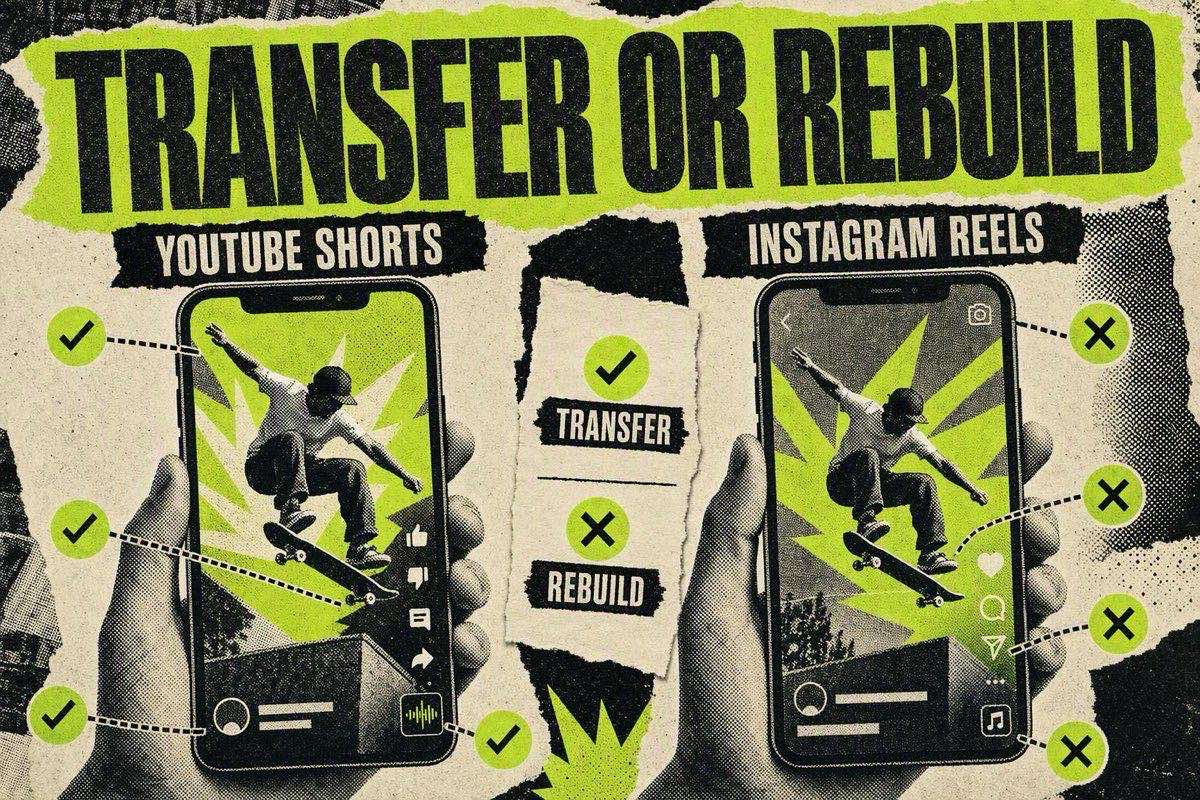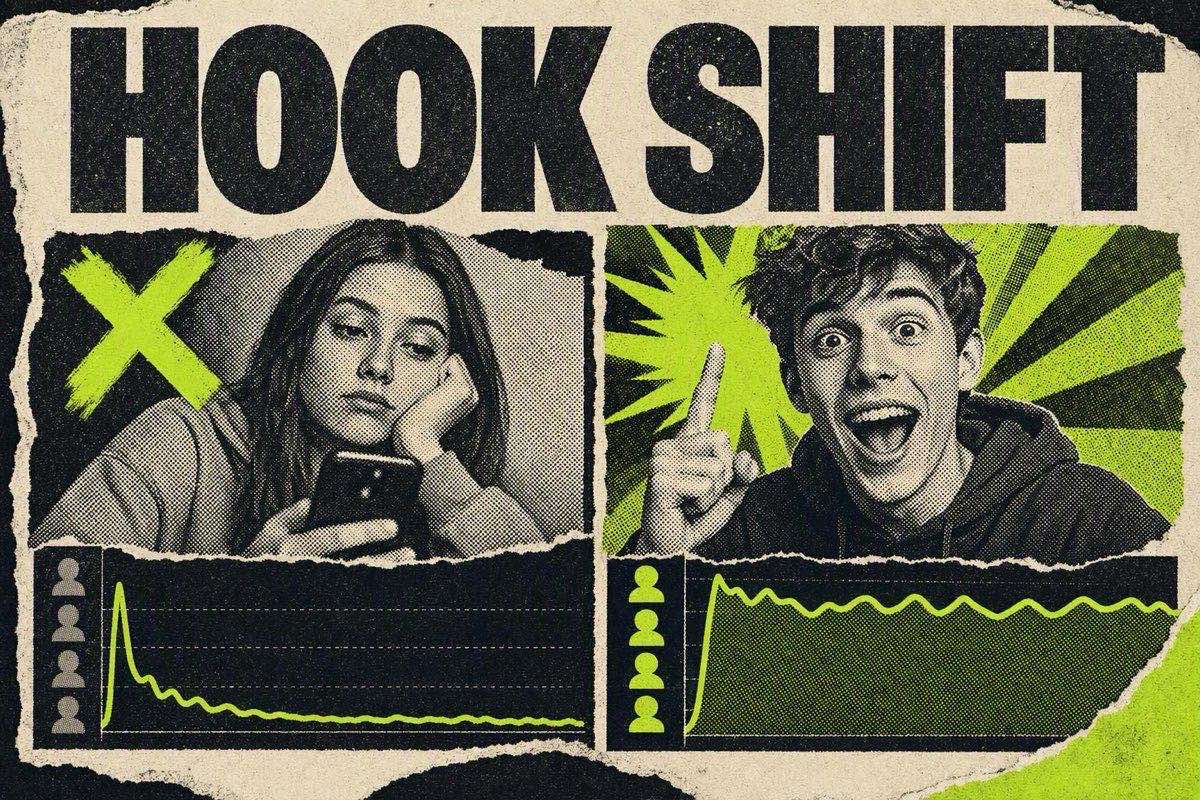
A hook that works on Instagram Reels usually works on YouTube Shorts, because both are vertical, sound-on, swipe-driven feeds where the first three seconds decide everything. The differences are smaller than most guides pretend, and they come down to two things: who the viewer is when they arrive, and what each platform's feed rewards. Get those two right and the same opener holds across both. Ignore them and you leave performance on the table on whichever platform you treated as an afterthought.
This is a practitioner comparison, not a spec sheet. For the dimensions, see the YouTube Shorts ad specs and Instagram Reels ad specs.
What is identical
Start with what does not change, because it is most of the job.
- The 3-second rule. On both platforms, the opening frame and first spoken line decide whether the viewer stays. A slow build, a logo, or a "hi guys" intro loses both audiences at the same rate.
- Sound-on delivery. Both feeds autoplay with audio and viewers expect it. The hook should be written to be heard, with on-screen text reinforcing rather than replacing it.
- Native visual grammar. Phone-shot framing, high early cut rate, captions in the platform's own style, and delayed branding all read as native on both. A studio-polished open signals "ad" on either feed.
- One angle per video. A hook that tries to carry a discount, a feature, and a testimonial at once fails on both. The discipline of testing one claim per cut, covered in the six-step AI video ad workflow, applies identically.
If you only remember one thing: the same vertical, sound-on, single-angle master is the right starting point for both. The rest is refinement.
What actually changes
Viewer intent on arrival
The biggest real difference is who the viewer is in the moment your ad appears.
A Reels viewer is inside a social-discovery scroll. They came to be entertained and to see what people they follow are posting, and their default posture toward an ad is "why is this interrupting me." A pattern-interrupt hook, something visually or verbally surprising in the first second, fits that mindset.
A Shorts viewer often arrives from the broader YouTube context, where a large share of behaviour is search and how-to intent. Even inside the Shorts feed, YouTube's audience is more conditioned to "I am about to learn or see something specific." That makes a curiosity or value-forward opener ("Here is the mistake that was killing our ads") land a little harder on Shorts than the pure spectacle hook that thrives on Reels.
This is a lean, not a rule. Both hook styles work on both platforms. But if a value-led opener underperforms on Reels, it is often worth testing a sharper pattern-interrupt version, and if a spectacle hook underperforms on Shorts, a clearer promise of payoff is the first thing to try.
What the feed rewards
The two platforms optimise for slightly different signals, and that changes what a hook should set up after it lands.
YouTube has long weighted retention and watch time heavily, and Shorts inherits that DNA. A Shorts hook is not just buying the next three seconds, it is setting up a reason to watch to the end, because sustained watch-through is what the feed rewards. Openers that promise a specific payoff and then deliver it ("by the end of this you will know exactly why") tend to suit that.
Reels sits inside Meta's engagement ecosystem, where sends, shares, and saves carry real weight alongside watch time. A hook that sets up something worth sending to a friend, a surprising result, a relatable "this is so me" moment, plays to what that feed rewards.
The practical version: on Shorts, ask "does this opener earn a full watch." On Reels, also ask "does this opener set up something worth sharing." The same ad can do both, but knowing which lever each platform leans on tells you which variant to test first.
Where the interface sits
A small but real difference. The engagement rail and CTA overlays sit in slightly different positions on each platform, so a hook caption that is perfectly placed on Reels can get clipped by the Shorts UI. This is a safe-zone issue, covered in each specs post, but it affects hooks directly: if your opening text lands under the interface, the viewer never reads the hook you wrote. Keep hook text in the middle band on both, designed for the tighter of the two.
How to run one hook across both platforms
You do not need two creative teams. You need one strong master and a short, deliberate test.
- Write the hook once, sound-first, for a 9:16 master with middle-band text.
- Generate two opener variants: one pattern-interrupt, one value/curiosity. The body stays identical. Regenerating only the first three seconds is cheap, which is the whole point of the hook-testing workflow.
- Serve the pattern-interrupt lean to Reels and the value lean to Shorts first, then let the data correct you. Often the "wrong" one wins, and now you know.
- Judge on the platform's own signal: watch-through on Shorts, watch-through plus shares on Reels.
- Reuse the winner as the new control and keep the loser for the other platform's next test.
Draft opener variants fast with the free AI hook generator, and pull proven structures from the ad hook formulas guide rather than writing each from scratch.
FAQ

Are YouTube Shorts hooks different from Instagram Reels hooks?
Mostly they are the same: both need a sound-on, pattern-breaking opener in the first three seconds. The difference is a lean. Shorts viewers skew slightly more toward value and curiosity openers because of YouTube's search-and-learn context, while Reels rewards pattern-interrupt and share-worthy hooks. The same hook usually works on both; the lean tells you which variant to test first.
Can I use the same hook on Shorts and Reels?
Yes, and you should start there. Build one 9:16 sound-on master with the hook text in the middle band, then test one alternate opener per platform. Two creative teams are unnecessary; one master plus a cheap opener swap covers both.
Which platform is harder to hook?
Neither is harder, they reward slightly different things. Shorts weights watch-through, so the hook has to set up a full-video payoff. Reels weights shares and sends alongside watch time, so the hook benefits from setting up something worth passing on. Design the opener to the signal each feed rewards.
How long should the hook be on Shorts and Reels?
The same on both: roughly the first three seconds. That is the window where retention is decided on either platform. Everything the hook needs to do, name the stakes, break the pattern, promise the payoff, has to happen before the viewer's thumb decides.
The platform changes the lean, not the fundamentals. A sound-on, single-angle, pattern-aware opener is the master for both feeds. Get the openers from the free AI hook generator, see the full picture in what transfers between Shorts and Reels, and get one new winning hook breakdown in your inbox every week with the HookAds newsletter.
The AI Ad-Making Kit
$99Make hyperreal AI video and image ads for any brand, with free AI tools. No camera, no agency.
- 10 modules
- 300+ hooks
- 500+ prompts
Canva ad templates, free.
Proven D2C ad layouts. Swap in your product, export, launch.
Browse templates →Want to act on what you just read?
Browse 3,400+ free, Canva-ready ad templates sorted by industry. One click to open, five minutes to customise.
Browse Free Templates