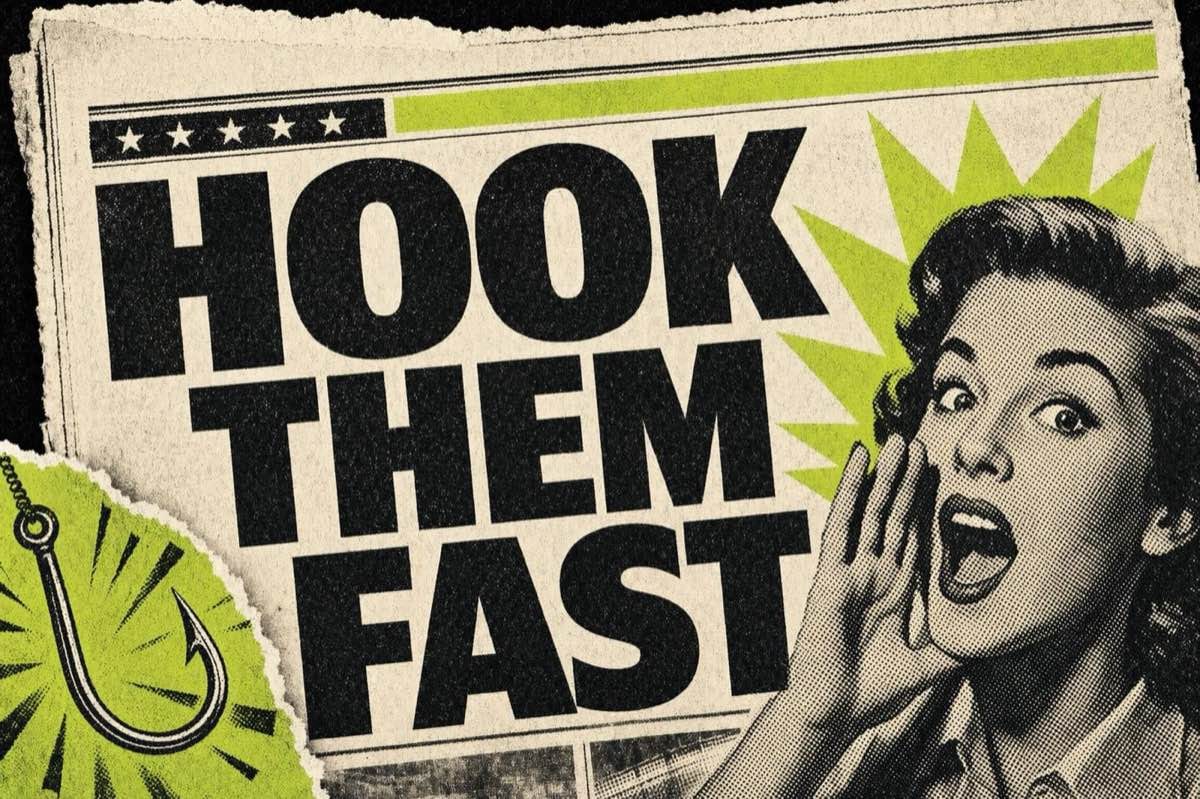
An intro hook is the first 1-3 seconds of a video ad, the opening line and opening frame working together to earn the rest of the watch time. Below are 30 concrete intro hook examples grouped into six categories (question, bold claim, pattern interrupt, direct callout, story cold-open, and stat-led), each with a plain explanation of why it stops the scroll, so you can adapt the pattern instead of copying the words.
Your video's edit, product, and offer can all be strong and still lose if the intro hook doesn't land in that first beat. Meta's own research on feed behavior found people spend an average of 1.7 seconds with a piece of content on mobile, so the intro hook isn't a nice-to-have creative choice, it's the only part of the ad guaranteed to get seen.
Why the Intro Hook Matters More Than the Rest of the Script
A video ad script can be great and still die in the first second if the opener doesn't interrupt the scroll. That's a structural fact about how feeds work, not a copywriting opinion. The MIT study on rapid image processing found the brain can identify an image seen for as little as 13 milliseconds, meaning the viewer has already formed an impression of your opening frame before they've consciously decided to keep watching.
That means an intro hook is doing two jobs at once: the visual (first frame, first movement, first face) and the verbal (first line of dialogue, voiceover, or on-screen text) have to work together, not sequentially. A strong line over a boring static frame still gets scrolled past. A strong frame with a weak line gets three extra seconds of attention that then goes nowhere.
The 30 hooks below are organized by the psychological mechanism they use, not by industry, because the mechanism is what transfers across products. A question hook works whether you sell skincare or SaaS. Swap the specifics, keep the structure.
Question Hooks (5 Examples)
Question hooks work because an unanswered question creates a small itch the brain wants resolved, a version of what psychologist George Loewenstein's information gap theory describes as a felt gap between what you know and what you want to know.
- "Why does your skin break out in the exact same spot every month?"
- "What if the reason your ads stopped converting has nothing to do with your creative?"
- "Ever wonder why some people never get sunburned, even at the beach all day?"
- "What's actually in the coffee you drink every morning?"
- "Why do some kitchen knives stay sharp for years and yours doesn't?"
The strongest question hooks name something the viewer already wonders about but has never had answered, not a generic "did you know" opener. Weak version: "Did you know most people do this wrong?" Strong version: name the specific wrong thing.
Bold Claim Hooks (5 Examples)
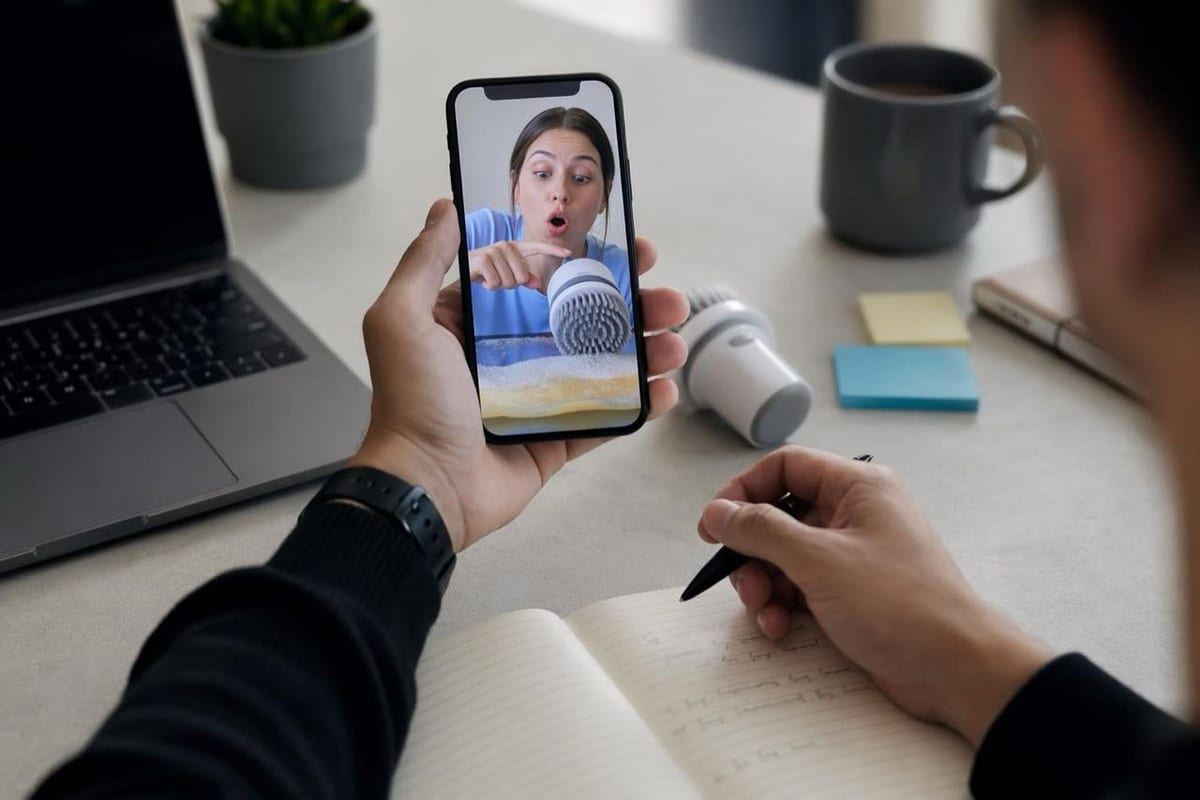
A bold claim hook works by triggering mild disbelief, the viewer keeps watching to check if the claim can possibly be true.
- "This $40 pillow fixed my neck pain in one night."
- "I stopped washing my hair for a month. Here's what happened."
- "You've been peeling garlic wrong your entire life."
- "This tool replaced three people on my team."
- "One ad format outperformed our entire creative team's ideas last quarter."
Bold claims need a fast payoff. If the claim is "one ad format outperformed the team," the very next beat of the video needs to start proving it, not build more suspense. A bold claim without quick evidence reads as clickbait and tanks watch-through.
Pattern Interrupt Hooks (5 Examples)
Pattern interrupts work because scrolling is mostly automatic behavior. The brain runs on autopilot through a stream of familiar content and filters for anomalies, not depth. Something that visually or verbally doesn't match the expected pattern forces a brief switch to deliberate attention.
- Cold open on a close-up of a product being destroyed (cut in half, dropped, stress-tested), no branding, no context yet.
- "Stop scrolling. This is not another ad." (delivered flat, no upbeat music)
- A jump cut mid-sentence: "...and that's when I realized the problem wasn't the..." (cut to product)
- Silence for the first second, then a single sound effect (a snap, a drop, glass breaking) before any dialogue.
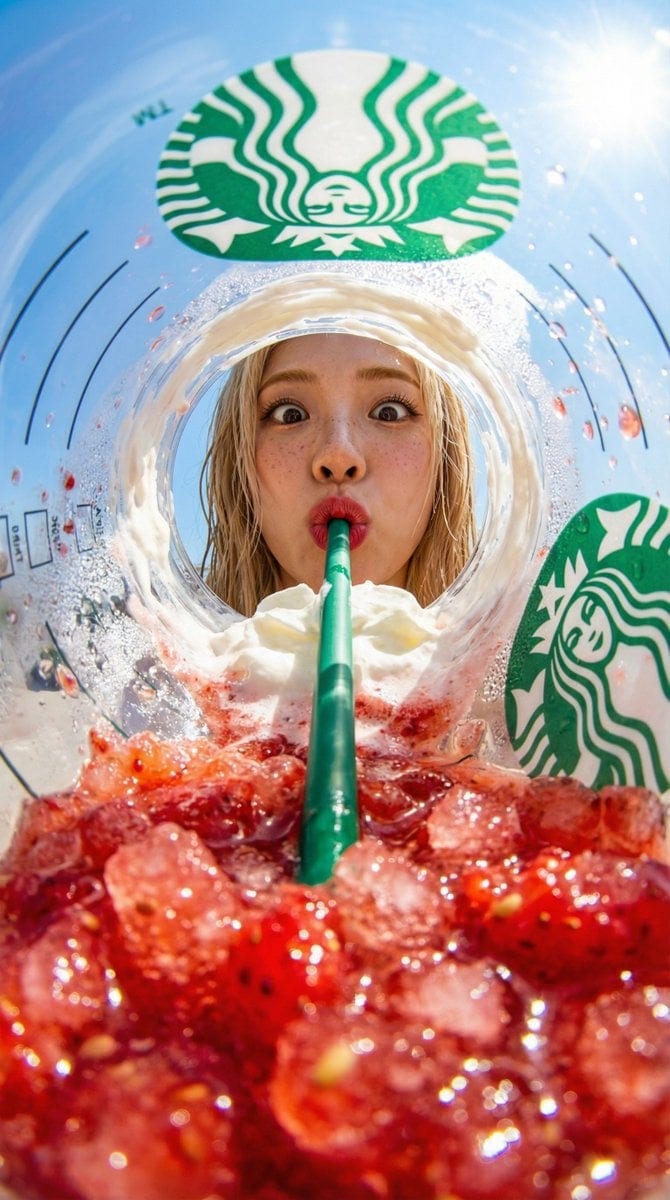
- Opening on an unexpected object in an unexpected place (a hair straightener in a gym bag, a blender on a hiking trail).
Pattern interrupts fade fast with repeated exposure. The same interrupt shown to the same audience for the fifth time is no longer an interrupt, which is why hook variety across a testing batch matters more than finding one hook that works forever, see the psychology of ad hooks breakdown for the full mechanism.
Direct Callout Hooks (5 Examples)
A direct callout hook works by naming the exact person the ad is for, so the right viewer feels seen and the wrong viewer self-selects out fast, which actually improves ad efficiency even though it looks like it should shrink the pool.
- "If you have a toddler who refuses to nap, watch this."
- "This is for anyone who's spent $200+ on skincare that didn't work."
- "Small business owners doing their own bookkeeping, this one's for you."
- "If your Shopify store gets traffic but no sales, keep watching."
- "Anyone who's been ghosted by a contractor mid-renovation needs to see this."
Direct callouts should name a situation, not a demographic. "This is for anyone who's spent $200+ on skincare that didn't work" targets a behavior and a felt frustration; "this is for women in their 30s" targets a label that doesn't guarantee the person has the problem at all.
Story Cold-Open Hooks (5 Examples)
Story cold-opens work by dropping the viewer into the middle of a scene with unresolved tension, the same mechanism that makes a TV show's cold open before the title sequence effective.
- "I almost didn't post this because it's embarrassing, but..."
- "Three months ago I was about to shut down my business. Here's what changed."
- "My dermatologist looked at my chart and said something I didn't expect."
- "I bought the cheapest version of this product first. Big mistake."
- "The first time I used this, I actually laughed out loud, here's why."
Story hooks work best delivered as UGC rather than scripted-sounding voiceover, the imperfection of a real person mid-story is part of what makes it credible, which is why this category dominates the complete guide to UGC ads.
Stat-Led Hooks (5 Examples)
A stat-led hook works when the number is specific enough to feel real and surprising enough to reframe something the viewer thought they understood.
- "94% of people replace their pillow less than once every 3 years. Here's why that's a problem."
- "The average toothbrush holds more bacteria than a toilet seat."
- "Most people lose two hours a week just switching between apps to find one file."
- "Nine out of ten skincare returns happen because of the wrong shade match, not a bad product."
- "The average person touches their phone over 2,000 times a day."
Every number in a stat-led hook needs a real source before it goes live. The examples above are illustrative templates, verify any statistic against an actual study or your own account data before you put it in an ad; an unsourced number that gets challenged in the comments does more damage than no stat at all.
How to Pick the Right Hook Category for Your Funnel Stage
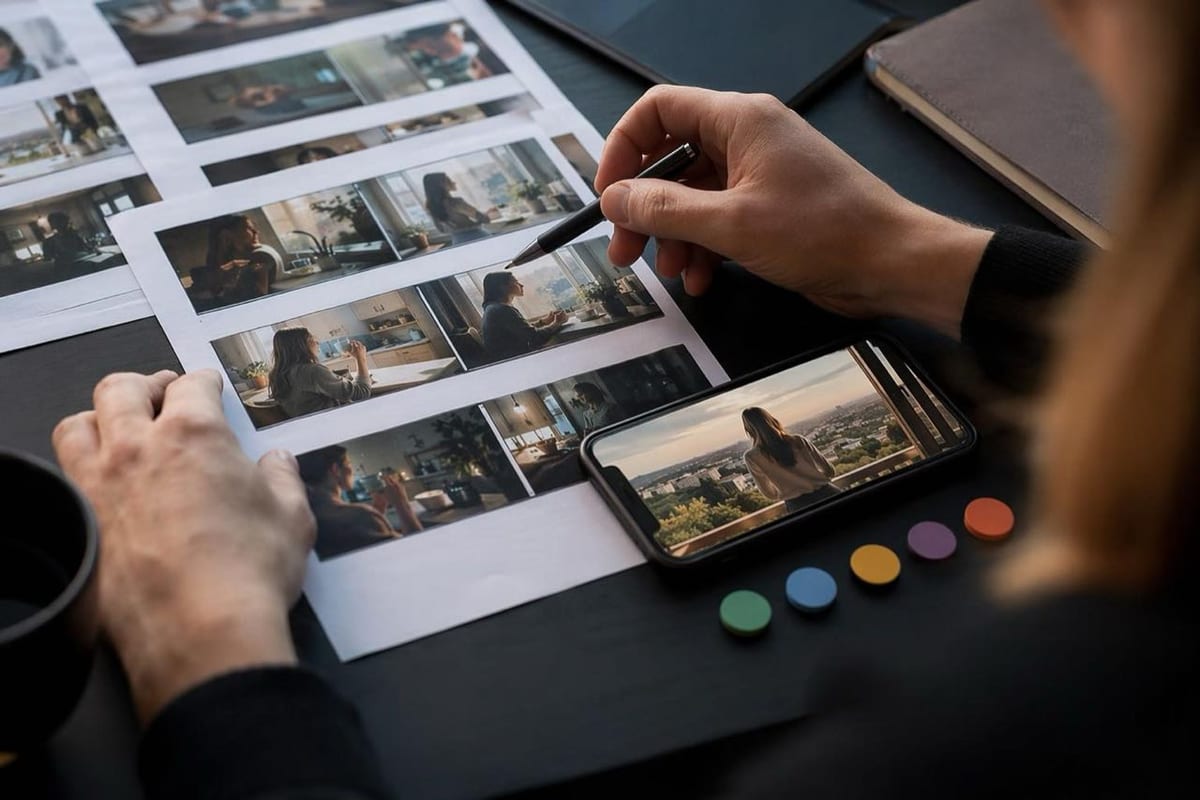
Cold audiences respond best to question and pattern-interrupt hooks, since neither requires any prior brand awareness, only category interest. Warm audiences and retargeting respond better to bold claims and stats, because the viewer already has enough context to evaluate a specific number or claim. Story cold-opens work at both ends of the funnel but perform especially well as the first ad a completely new audience sees, since a story doesn't ask for a purchase decision yet, just three more seconds of attention.
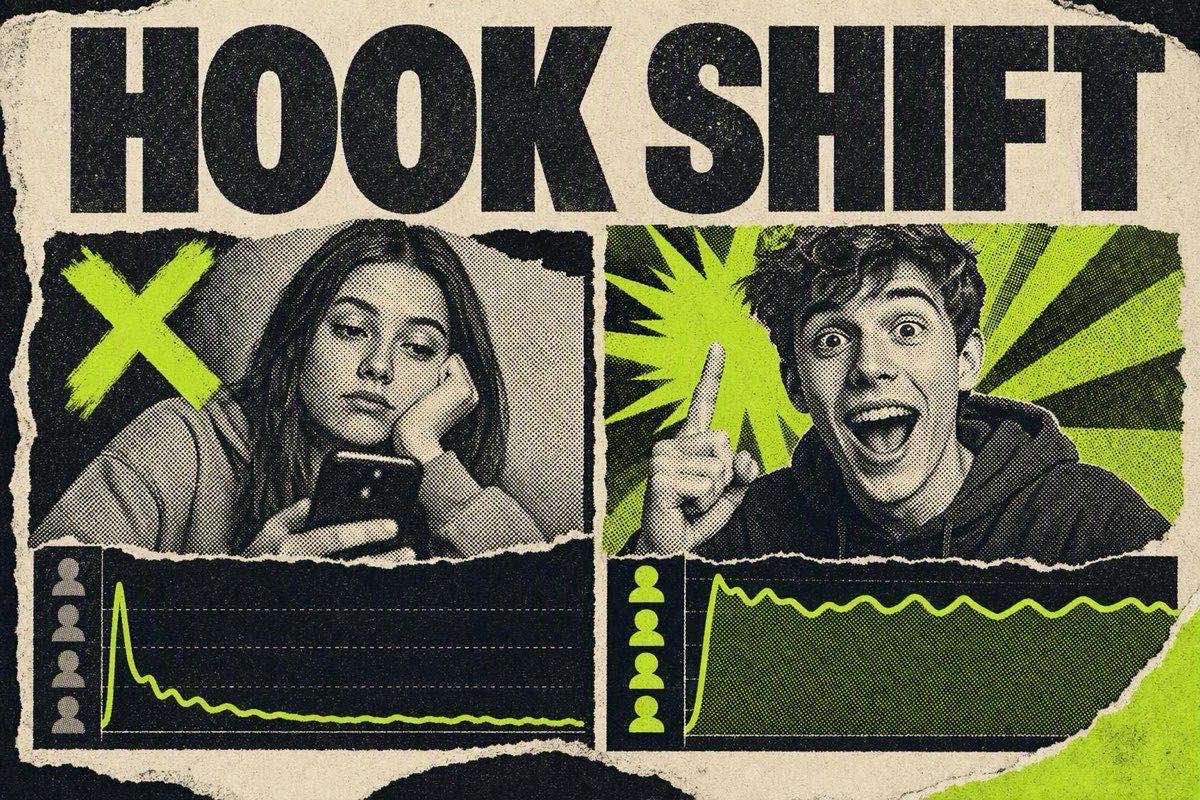
Match the hook category to your video's actual content, not the other way around. A pattern-interrupt intro promises something visually unusual is about to happen; if the rest of the video is a standard talking-head testimonial, the mismatch between the opener's promise and the payoff will show up as a watch-time cliff in your first three seconds of retention data.
Turning These Categories Into Your Own Hooks Fast
Manually drafting 30 hook variations for every new offer isn't realistic on a real production schedule. The AI hook generator takes your product and audience and outputs hooks across these same six categories, so you can pressure-test which mechanism fits your offer before you script a single frame. Pair the hook with a full script structure using one of the ad copy formulas, PAS in particular maps directly onto a pattern-interrupt or bold-claim opener followed by a problem statement.
If the ad is heading to Reels specifically, the opener also needs to survive a vertical, sound-on format, worth checking the platform specifics in Instagram Reels ad specs & best practices before you shoot.
FAQ
What makes a good intro hook for a video ad?
A good intro hook combines a visual (first frame, first movement) and a verbal line (first spoken or on-screen words) that together interrupt the viewer's autopilot scrolling within about 1-3 seconds. It should promise something specific enough that the rest of the video can deliver on it, not just be loud or attention-grabbing for its own sake.
How long should a video ad's intro hook be?
The functional hook window is roughly the first 1-3 seconds, though the meaningful decision happens even faster than that. The opening frame gets processed almost instantly, so treat the hook as the first frame plus the first full sentence, not a longer "intro section" before the ad really starts.
Do intro hooks work the same way for Reels, Stories, and feed video?
The underlying mechanisms (question, bold claim, pattern interrupt, callout, story, stat) transfer across all three, but Reels and Stories are sound-on, full-screen environments where a verbal hook lands differently than in a feed video someone might watch muted. Design the hook assuming sound is on for vertical placements.
Should every video ad open with a question?
No. Question hooks are one of six effective categories, and using the same category for every ad in a testing batch reduces variety, which is the actual lever that keeps performance from decaying. Rotate across categories so you can see which mechanism this specific audience responds to.
How many hooks should I test before scaling a video ad?
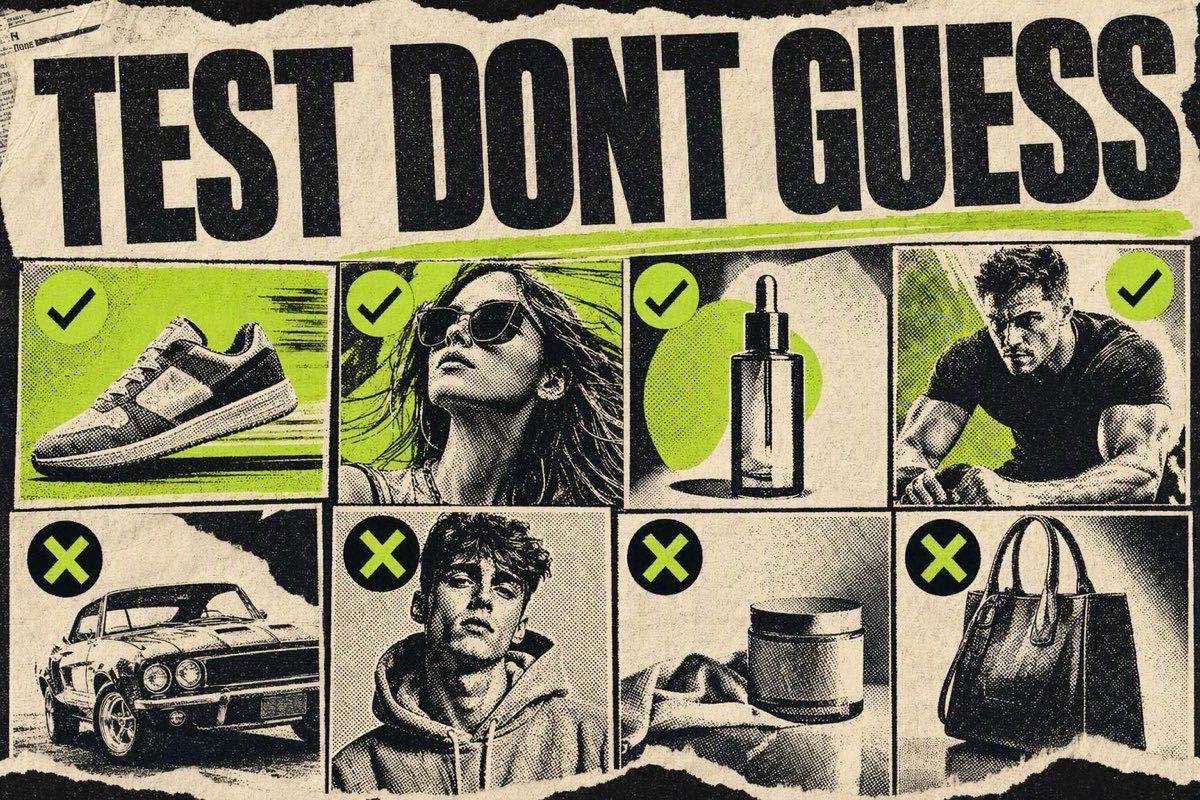
There's no fixed number, but testing a single hook against no comparison tells you nothing about whether it's actually strong. A reasonable starting batch is 4-6 hooks across at least 3 different categories from this list, run against the same script and offer, so the hook is the isolated variable.
Thirty templates is a starting point, not the ceiling. Generate hooks tailored to your exact product and audience with the free AI hook generator, browse real ad breakdowns in ad teardowns, and get one new winning hook analysis in your inbox every week when you join the HookAds newsletter.
The AI Ad-Making Kit
$99Make hyperreal AI video and image ads for any brand, with free AI tools. No camera, no agency.
- 10 modules
- 300+ hooks
- 500+ prompts
Canva ad templates, free.
Proven D2C ad layouts. Swap in your product, export, launch.
Browse templates →Want to act on what you just read?
Browse 3,400+ free, Canva-ready ad templates sorted by industry. One click to open, five minutes to customise.
Browse Free Templates