UGC ads are paid ads built from creator-made content that looks like a normal person filmed it on their phone. No studio lighting, no brand voiceover, no logo animation. Just someone talking about a product the way a friend would. And on Meta right now, UGC ads are the single most reliable creative format for lowering CPA at the testing stage.
That reliability is why the format took over. In consumer surveys aggregated by Billo, 60% of consumers say user-generated content is the most authentic content type they see, while only 16% say the same about branded content. Your audience has spent a decade learning to scroll past anything that looks like an ad. UGC does not look like an ad. That is the whole trick.
This guide covers what UGC ads actually are, why they beat polished creative in cold-traffic testing, the six formats that work right now, how to brief a creator so you do not waste money, and where AI-generated UGC fits.
What Are UGC Ads?
A UGC ad is paid media that uses creator-style content as the creative. The term is slightly misleading. Classic user-generated content was organic: customers posting about products on their own. UGC ads are usually commissioned. A brand pays a creator to film a video in their own home, in their own voice, following a loose brief. The brand then runs that video as a paid ad from its own ad account.
So the honest definition: UGC ads are professionally commissioned content engineered to feel unpolished.
Three things separate a UGC ad from a standard brand ad:
- A real face, not a brand. The person on screen presents as a customer or peer, not a spokesperson.
- Native production quality. Vertical, handheld, natural light, real rooms. It matches the organic content around it in the feed.
- First-person framing. "I tried this for 30 days" instead of "Introducing our new formula."
The format runs everywhere short vertical video runs: Instagram Reels, Facebook Feed and Stories, YouTube Shorts, and TikTok in markets where it operates. The scripting principles are identical across all of them.
Why UGC Ads Outperform Polished Creative
Not because polish is bad. Because polish is a pattern, and patterns get filtered out.
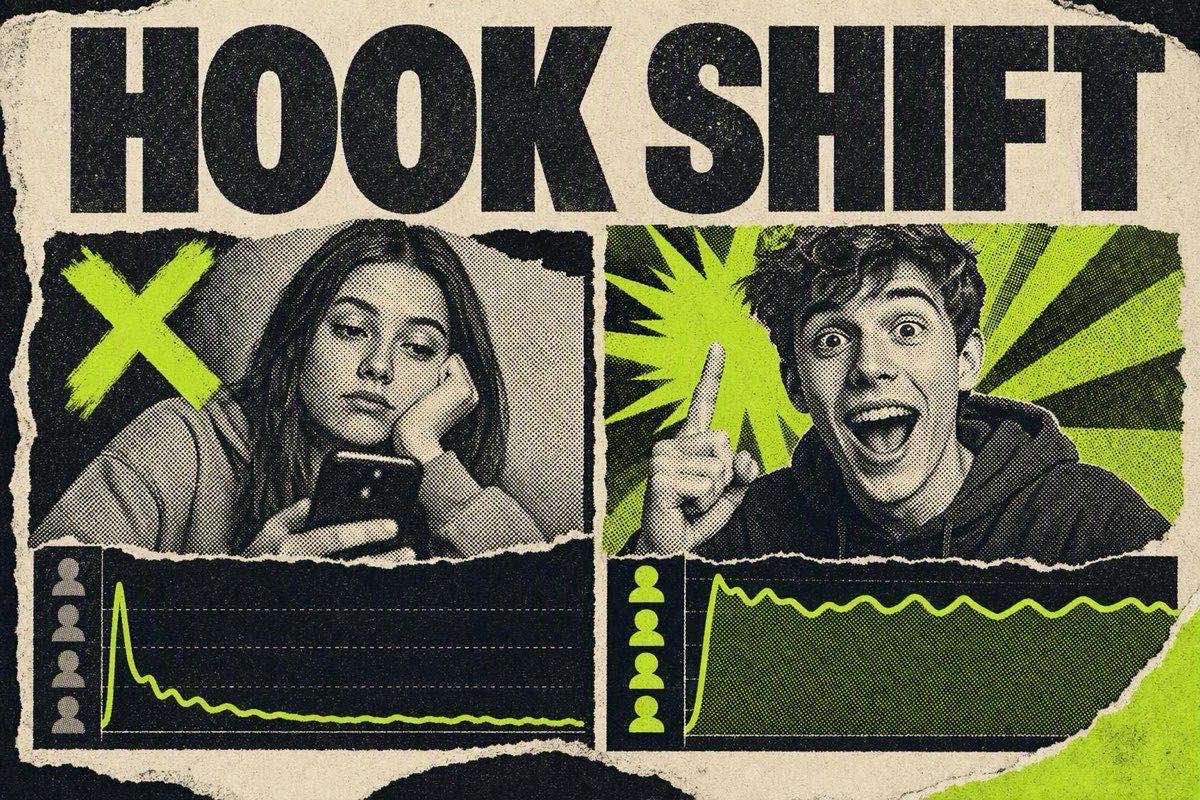
Pattern interruption. Every DTC brand ad looks the same: clean product shots, slow-motion pours, upbeat licensed music. Your prospect's brain has a trained classifier for this and it fires "ad, skip" in under a second. A shaky selfie video of someone mid-sentence does not trip that classifier. You buy an extra one to two seconds of attention, and on Meta, the first three seconds decide everything. We break down exactly how those opening seconds work in our guide to Facebook ad hook examples.
Borrowed trust. A recommendation from a person, even a stranger, carries social proof that a brand statement cannot. The viewer knows intellectually that the creator was paid. It still works, because the delivery format is the one their brain files under "peer opinion" rather than "corporate claim."
Volume economics. This one matters most for media buyers. A single studio shoot can cost what 10 to 15 creator videos cost. Creative testing is a numbers game: more concepts tested per month means you find winners faster and replace fatigued ads before performance decays. UGC makes high-volume testing affordable for brands that could never sustain it with studio production.
Algorithm fit. Meta's delivery system rewards creative that people actually watch. Native-feeling content earns longer watch time and more engagement signals, which feeds back into cheaper delivery.
One honest caveat: UGC is not automatically better. A boring UGC video loses to a sharp studio ad every time. The format buys you attention. The script still has to convert it.
The 6 UGC Ad Formats That Work Right Now

- Format — What it looks like — Best for
- Testimonial — Creator speaks to camera about their experience — Considered purchases, skincare, supplements
- Unboxing — First reaction opening the product on camera — Products with strong packaging or a visual reveal
- Demo / how-to — Creator shows the product solving a problem in real time — Anything with a visible before and after
- Day-in-the-life — Product woven into a routine vlog — Lifestyle brands, apps, consumables
- Reaction / skepticism arc — "I did not think this would work, so I tested it" — Crowded categories with jaded buyers
- Founder story — Founder films phone-style, explains why they built it — Early-stage brands without customer volume yet
Two notes from running these in the wild.
The skepticism arc is the strongest opener for cold traffic in saturated niches. Starting with doubt ("I thought this was another scam...") disarms the exact objection the viewer already has. It also sets up a narrative payoff, which holds watch time.
The founder story is the most underrated. It costs nothing, it is legally safe because you are not scripting customer claims, and audiences respond to a real person explaining a real decision. If you have zero budget for creators, start here.
Whichever format you pick, the first line of the script does most of the work. If you need openers, our free hook generator produces platform-ready first lines, and the prompt library has over 1,500 AI prompts for ad creative you can use to draft script variations.
Real UGC Ad Examples From Documented Campaigns
No invented numbers here. These are publicly documented cases.
True Classic: UGC as the core creative engine
Menswear brand True Classic has generated over $250 million in revenue, and its team has said publicly that "UGC is absolutely huge for us," per Retail TouchPoints. What is worth stealing is not the scale, it is the message discipline. True Classic's UGC does not talk about fabric weight or stitching. It talks about how average guys look in the shirts. Relatable body-type humor delivered by relatable men. They test hundreds of creative variations monthly and scale winners fast, before fatigue sets in. The lesson: UGC works when the creator articulates the benefit in customer language, not spec language.
Doe Lashes: creator content instead of an ad budget
Jason Wong launched Doe Lashes with roughly $500 and grew it into a brand valued around $15 million within its first year, documented in Octane AI's breakdown. The brand held off on paid ads early and seeded product to micro-influencers instead, then reused that creator content across channels. The lesson for UGC ads specifically: creator content earns its keep twice. Once organically, then again as paid creative, because the best-performing organic videos are pre-validated hooks.
The pattern across both
Neither brand treated UGC as a one-off asset. Both built a repeatable pipeline: many creators, many angles, constant testing, quick kills. If you want more reverse-engineered breakdowns like this, our ad teardowns take apart real winning ads hook by hook, and the case studies section documents full campaigns with their public numbers.
How to Brief a UGC Creator (Without Killing the Authenticity)
The most common failure mode: the brand writes a word-for-word script, the creator reads it, and the result is a bad TV commercial filmed on a phone. You paid for authenticity and then briefed it out of the video.
A good brief controls the structure and frees the delivery:
- One core angle. Not five benefits. One. "This ad is about falling asleep faster." A creator juggling multiple messages delivers none of them.
- Three mandatory beats. Hook concept in the first 3 seconds, one demonstration or proof moment, one clear call to action. Let them write the actual sentences.
- Claim guardrails. List what they legally cannot say. Health claims, guaranteed results, and competitor comparisons get ad accounts flagged.
- Format specs. Vertical 9:16, 20 to 40 seconds, captions on, natural light, no music (you will add sound in post).
- Ask for hook variations. Have every creator film the same body with 3 different opening lines. Hooks account for most of the performance variance between cuts, so this triples your testable assets for maybe 20% more cost. Our guide to ad hook formulas for ecommerce has fill-in structures you can drop straight into a brief.
On sourcing: creator marketplaces, your own customer base (best deal available, since real customers say things no hired creator would invent), and inbound UGC creators pitching you. Expect to pay per video, with usage rights for paid media negotiated explicitly. Always get paid usage rights in writing. Running a creator's video as an ad without whitelisting or usage terms is how brands end up in disputes.
AI UGC Ads: What They Are and When They Make Sense
AI UGC is exactly what it sounds like: tools like Arcads and Creatify generate UGC-style videos using AI actors, so no human creator films anything. You paste a script, pick an avatar, and get a talking-head ad in minutes.
The factual state of it in 2026: quality has crossed the "passable in feed" line for many use cases. Brands use AI UGC mainly for fast hook testing, since generating 20 script variations costs a fraction of hiring 20 creators, and for markets or languages where sourcing creators is hard.
The trade-offs are just as real. Some viewers clock AI actors instantly, and trust drops when they do. Meta requires advertisers to disclose photorealistic AI-generated people in certain contexts, and platform policy keeps tightening. And an AI actor cannot give you the thing that makes UGC work in the first place: a genuine reaction.
The pragmatic play most teams settle on: use AI UGC to cheaply find which script and hook wins, then hand the winning script to a human creator for the scaled version. We compare the major tools honestly in our AI ad generator comparison.
How to Test UGC Ads Without Burning Budget
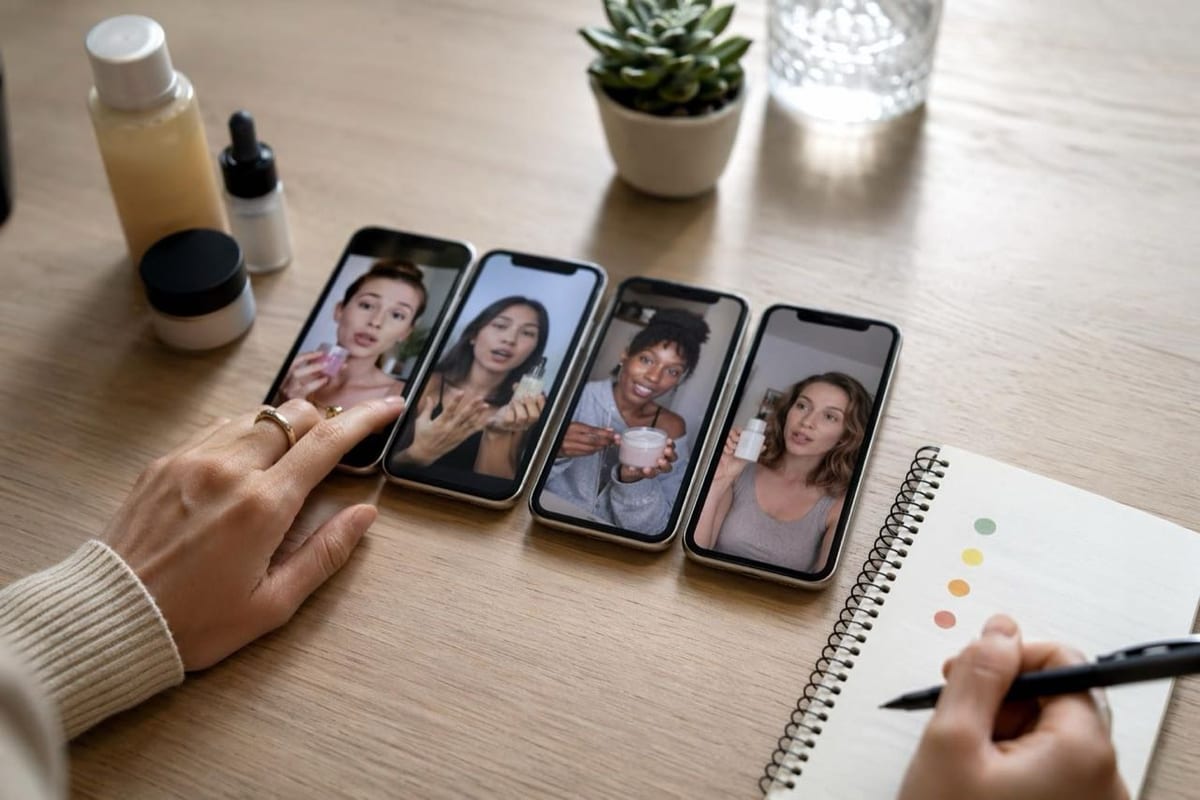
A minimal testing structure that works:
- Start with 3 creators x 2 formats x 3 hooks. That is 18 assets from a modest spend, enough for a real signal.
- Test hooks first. Same body, different first lines, and let 3-second view rate and hold rate tell you which opener earns attention.
- Judge on CPA or cost per result, not CTR. UGC often gets high engagement from people who never buy. Curiosity clicks are not customers.
- Kill fast, iterate faster. Give each asset a defined spend cap. Rebuild new variations from the winning creator plus winning angle rather than restarting from zero.
- Refresh on a cadence. UGC fatigues like everything else. When frequency climbs and CPA drifts up, you need the next batch already filmed. This is why the pipeline matters more than any single video.
FAQ
What does UGC stand for in advertising?
UGC stands for user-generated content. In advertising, UGC ads are paid ads that use creator-style video or images designed to look like organic customer content rather than brand-produced creative. Most modern UGC ads are commissioned from paid creators rather than sourced from actual customers.
How much do UGC ads cost to make?
Rates vary widely by market and creator experience, and paid usage rights are typically negotiated on top of the base video fee. There is no standard rate card. What stays constant: a batch of creator videos costs a fraction of one studio shoot, which is what makes volume testing possible.
Do UGC ads work for B2B and SaaS?
Yes, with adjusted formats. Founder-story videos, screen-recording demos with a talking head, and "how I use this tool" walkthroughs are UGC formats that perform for software. The peer-trust mechanism is identical; only the setting changes from a bathroom counter to a desk.
Are AI-generated UGC ads allowed on Meta?
Yes, AI-generated ads run on Meta, but policies require disclosure of photorealistic AI-generated people in certain contexts, and rules continue to evolve. Check Meta's current advertising standards before scaling AI UGC, and expect some audiences to recognize AI actors and discount the message accordingly.
How many UGC ads should I test at once?
Enough to get a signal without splitting budget too thin. A practical starting batch is 12 to 18 assets: a few creators, each filming multiple hook variations on one or two formats. Judge them on cost per result, kill losers quickly, and rebuild from the winning combination.
Steal what already works
UGC ads win because they borrow the one thing brand accounts cannot fake: a human being talking like a human being. Get the format right, brief for structure instead of scripts, and treat creative as a volume game.
Before you brief your first creator, spend 20 minutes in our free ad teardowns to see how winning UGC ads structure their first 10 seconds, then pull script starters from the 1,500+ free AI prompt library. One new winning hook breakdown lands in the newsletter every week.
The AI Ad-Making Kit
$99Make hyperreal AI video and image ads for any brand, with free AI tools. No camera, no agency.
- 10 modules
- 300+ hooks
- 500+ prompts
Canva ad templates, free.
Proven D2C ad layouts. Swap in your product, export, launch.
Browse templates →Want to act on what you just read?
Browse 3,400+ free, Canva-ready ad templates sorted by industry. One click to open, five minutes to customise.
Browse Free Templates