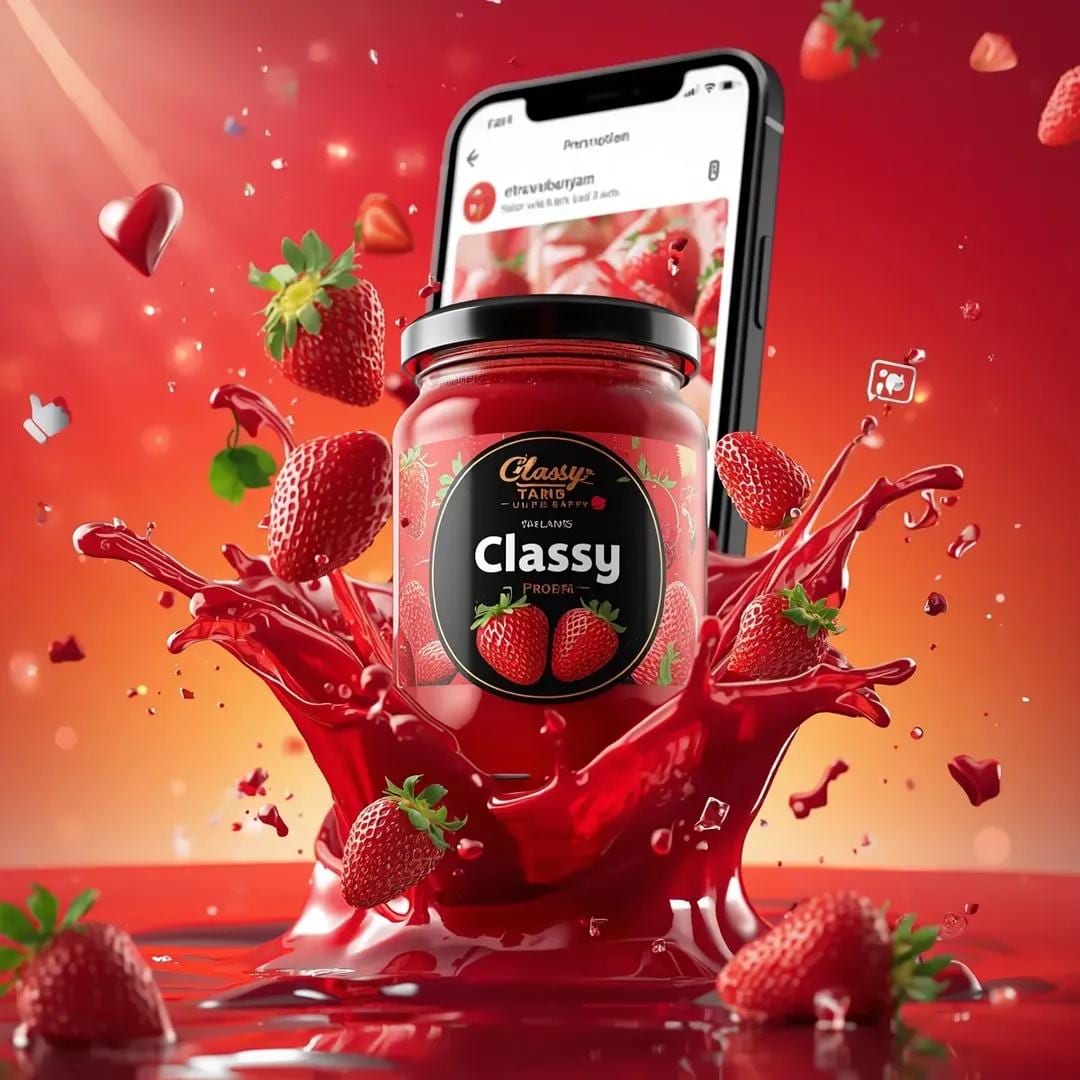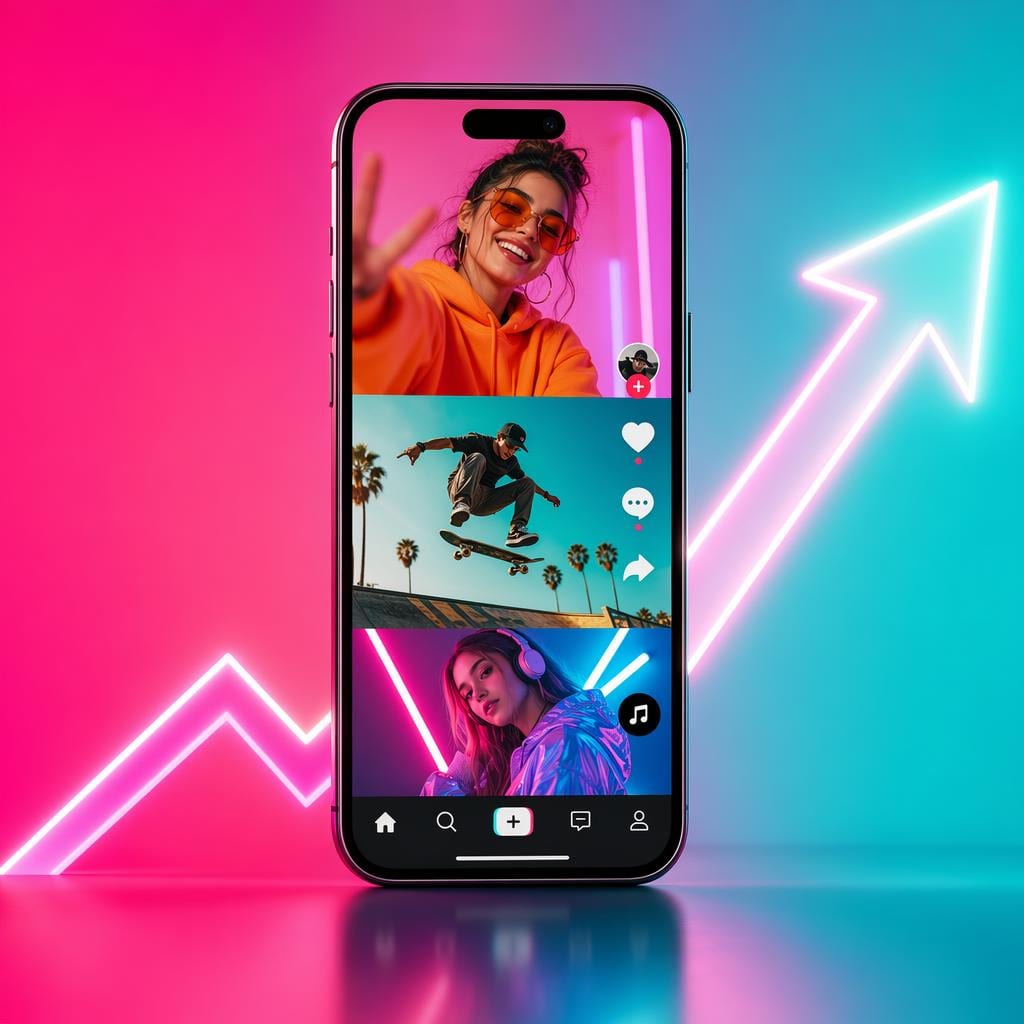
Facebook ad creative is the actual image, video, or carousel a person sees in their feed, along with the headline, primary text, and call-to-action button around it. It is the single biggest lever in Meta advertising: targeting and bidding decide who sees your ad, but creative decides whether they stop scrolling, and Meta's own delivery system rewards creative that earns engagement with cheaper distribution.
This guide covers what counts as ad creative, the formats you'll actually choose between, the hook-body-CTA structure every winning ad follows, and the mistakes that quietly waste budget before you even get to targeting.
What Is Facebook Ad Creative, Exactly?
Ad creative is everything a viewer experiences as "the ad" itself, separate from who it's shown to or how much you bid. That includes:
- The visual: a static image, a video, a carousel of images, or a slideshow
- The primary text above or below the visual
- The headline and description shown near the CTA button
- The call-to-action button copy ("Shop Now," "Learn More," "Sign Up")
Two ads can run identical targeting, identical budget, and identical placements, and one can cost three times less per result than the other. That gap is almost always creative, not strategy. Nielsen's analysis of digital ad campaigns found creative quality contributed to roughly 65% of digital ad sales lift, more than targeting, reach, or brand alone, according to Marketing Charts' summary of the findings. Whatever the exact split in any single account, the practical takeaway holds: a mediocre ad with perfect targeting still underperforms a great ad with average targeting.
The 4 Facebook Ad Creative Formats
Static image ads
A single photo or graphic with text overlay, primary text, and a CTA. Cheapest and fastest to produce, and still the right starting point for testing a new angle before investing in video. Best for direct offers, before/after product shots, and text-driven hooks that don't need motion to land.
Video ads
Anything from a 6-second bumper to a 60-second explainer. Video earns more time in front of a viewer than a static image, which matters because Meta's delivery system tracks watch time as a quality signal. The tradeoff is production cost and the fact that a bad video wastes more of your testing budget than a bad static image would.
Carousel ads
Multiple images or videos a viewer swipes through in one ad unit. Strong for showing a product from multiple angles, telling a sequential story, or listing several products in a single unit without needing separate ad sets. Underused because it takes more creative assets to fill out properly, but often outperforms a single static image for catalog-style businesses.
UGC-style ads
Creator-shot or AI-generated video that looks like organic content rather than a produced brand ad: handheld framing, natural light, a real person talking to camera. This has become the most reliable format for lowering cost-per-result during the testing phase, because it doesn't trip the mental "that's an ad" filter a produced commercial does. Our complete guide to UGC ads breaks down the six formats and how to brief a creator without killing the authenticity.
The Anatomy of Ad Creative: Hook, Body, CTA
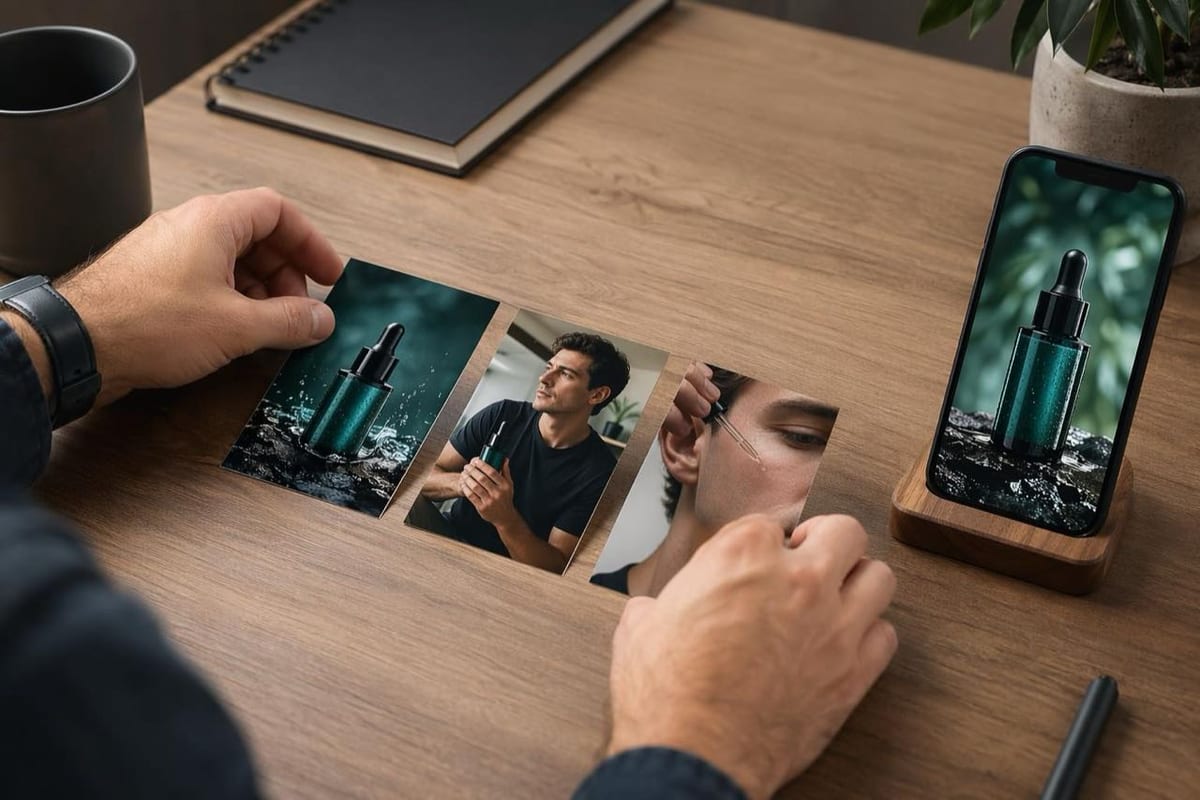
Every format above still follows the same three-part structure underneath. Miss any one of the three and the ad underperforms regardless of production quality.
1. The hook (first 1-3 seconds of video, or the first thing the eye lands on in a static image). This is the only job of the hook: stop the scroll. Not sell, not explain, just interrupt the pattern of everything else in the feed. A strong hook is a specific claim, a visible before/after, or a question that names the exact problem your audience already has. Our Facebook ad hook examples breaks down 25 real openers by category, and if you want structured formulas to build your own, 50 ad hook formulas for e-commerce gives you fill-in-the-blank templates.
2. The body. Once you have attention, the body earns the click by making the claim credible: a demonstration, a specific proof point, a relatable objection getting answered. This is where most beginner ads go wrong by listing features instead of showing outcomes. "Made with merino wool" is a feature. "Doesn't smell after three days of hiking" is the outcome that feature produces, and it's the outcome that belongs in the ad.
3. The CTA. One instruction, stated once, never buried at the very end of a long caption. The CTA button copy and the final line of the ad text should say the same thing in different words, not fight each other. If your video says "grab yours" and your button says "Learn More," you've split the reader's decision in two.
The headline and description fields matter more than beginners expect. They sit right next to the CTA button and are often the last thing read before someone taps or scrolls past. If you're stuck writing them, our free Facebook ad headline generator produces multiple options from a short product description.
5 Ad Creative Mistakes That Quietly Kill Performance
1. Burying the hook. Putting the brand logo, a slow zoom, or generic lifestyle b-roll before the actual claim. By the time the hook lands, half the audience has already scrolled past.
2. One angle stretched across five creatives. Producing five ads that all make the same claim in slightly different words isn't a real test. It's one test wearing five outfits. A real test varies the underlying angle: price-focused vs. outcome-focused vs. social-proof-focused.
3. Ignoring placement specs. A creative built only for the Feed often gets cropped or misaligned in Stories and Reels placements. Check your Facebook ad sizes reference before launching across all placements, not after.
4. No captions on video. Most people watch video with sound off by default. A video whose hook depends on spoken audio loses most of its audience in the first second.
5. Never refreshing creative. Meta's delivery algorithm shows a winning ad to the same audience repeatedly until frequency climbs and performance decays. Treat every ad as having a shelf life, not a permanent slot in the ad set.
The Specs Beginners Get Wrong
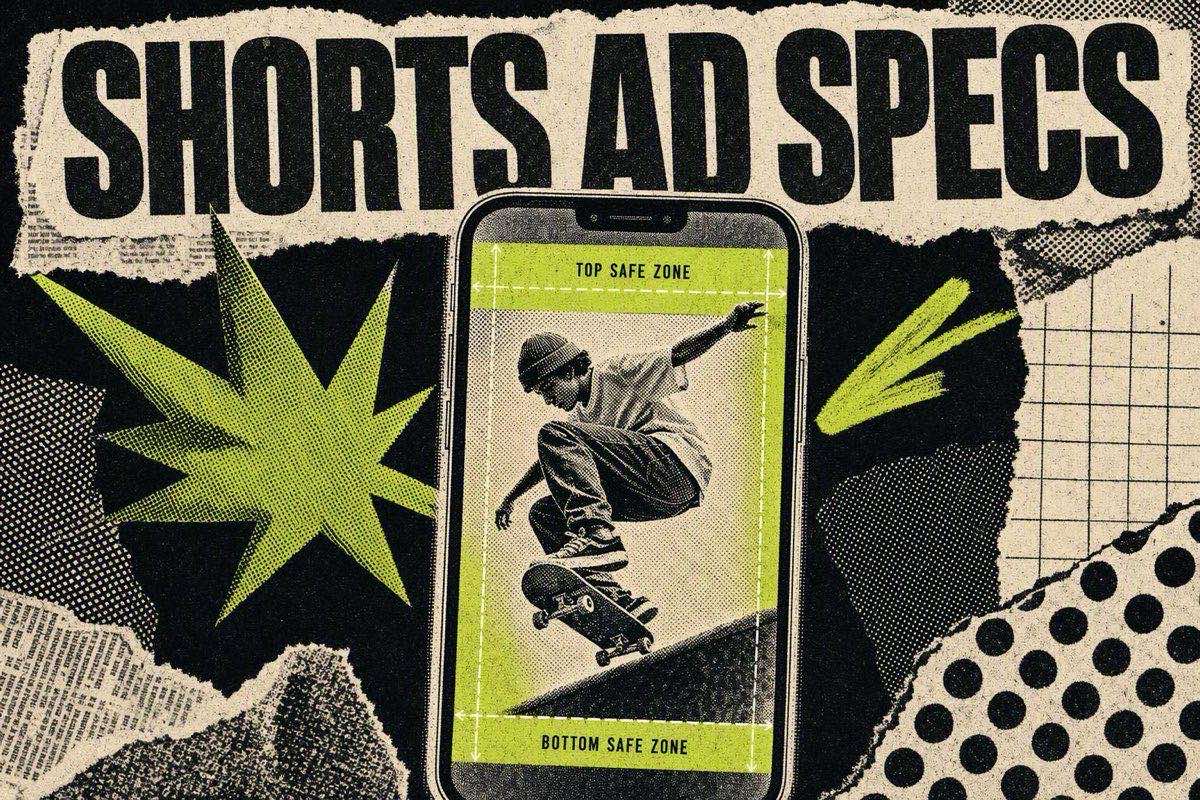
Meta unified its vertical placements in March 2026: Facebook Stories, Facebook Reels, Instagram Stories, and Instagram Reels now share a single 9:16 safe zone, so one correctly designed vertical asset runs across all four without getting obstructed by the UI, per Superscale's 2026 spec breakdown. Feed still runs on 1:1 or 4:5.
The safe-zone math matters more than beginners expect: the top roughly 14% of a vertical creative is reserved for the profile icon, username, and "Sponsored" label, and the bottom 20-35% is reserved for the CTA button and caption. Put your hook's key text or claim inside that middle band, not at the very top or bottom, or the platform UI will cover it on a real device.
If you can only produce one asset for a new angle, make it a vertical 9:16 video under 30 seconds first. It runs across the most placements and typically sees the highest engagement, then add a 4:5 crop for Feed once the concept proves itself. Full placement-by-placement dimensions live in our Facebook ad sizes reference.
Static vs. Video: Which Should You Test First?
Neither format wins universally, and the honest answer depends on what you're testing. If you're validating a brand-new angle, start static: it's faster and cheaper to produce five static variations than five videos, and static clarifies whether the claim works before you spend on production. Once an angle proves itself in static, invest in video and UGC to scale it further, since video typically earns more delivery once Meta's system has engagement signal to optimize against. Our static ads vs. video ads breakdown has the fuller comparison with when each format actually wins.
A Worked Example: Turning One Feature Into Real Creative

Take a made-up but realistic example: a direct-to-consumer brand sells a weighted blanket. The feature sheet says "7 lbs, cotton shell, glass bead filling." None of that is an ad on its own.
Applying the anatomy above:
- Hook: "I haven't slept through the night in years. This changed that in one week." (a specific claim, not a feature)
- Body: A short demonstration of the weight settling, paired with one on-screen stat about sleep quality or a simple before/after framing of restless vs. still.
- CTA: "Try it for 30 nights, free returns." One instruction, one guarantee, no competing asks.
Notice the feature (glass bead filling, 7 lbs) never appears in the hook. It shows up, if at all, as supporting proof in the body, because the outcome (sleeping through the night) is what earns attention and belief, not the manufacturing detail. This is the single mental shift that separates beginner ad copy from ad copy that converts: always lead with what changes for the person, not what the product is made of.
FAQ
What is Facebook ad creative?
Facebook ad creative is the actual content a person sees in an ad: the image, video, or carousel, plus the primary text, headline, and call-to-action button around it. It's distinct from targeting and bidding, which decide who sees the ad rather than what they see.
What makes good ad creative?
Good ad creative follows the hook-body-CTA structure: a specific claim or visual that stops the scroll in the first few seconds, a body that makes that claim credible through demonstration or proof, and one clear instruction at the end. Beginners most often fail on the hook, either burying it or making it too vague to earn attention.
Should I use images or video for Facebook ads?
Test static images first when validating a brand-new angle, since they're faster and cheaper to produce in multiple variations. Once an angle proves itself, move to video and UGC-style content to scale further, since video tends to earn more delivery once there's engagement data behind it.
How many ad creatives should a beginner test at once?
A workable starting batch is 3-5 creatives testing genuinely different angles, not five versions of the same claim. Judge them on cost per result rather than clicks or engagement, and be ready to kill underperformers within the first few days of spend.
Do Facebook ad creatives need to be different for Instagram and Reels?
Yes, at minimum in aspect ratio and pacing. A creative built for the horizontal Feed placement often gets awkwardly cropped in vertical Stories and Reels placements. Design for vertical first since that's where most attention now sits, then adapt down for Feed.
Start With a Real Example, Not a Blank Page
Ad creative rewards imitation of what already works over inventing from scratch. Before you brief your next creative, spend 15 minutes in our free ad teardowns, where we reverse-engineer real ads hook by hook, and pull a script starter from the 1,500+ free AI prompt library. One new winning hook breakdown lands in the newsletter every week.
The AI Ad-Making Kit
$99Make hyperreal AI video and image ads for any brand, with free AI tools. No camera, no agency.
- 10 modules
- 300+ hooks
- 500+ prompts
Canva ad templates, free.
Proven D2C ad layouts. Swap in your product, export, launch.
Browse templates →Want to act on what you just read?
Browse 3,400+ free, Canva-ready ad templates sorted by industry. One click to open, five minutes to customise.
Browse Free Templates