The best Facebook ad hook examples all do the same job: earn the next two seconds of attention. Below are 25 hooks grouped by psychological trigger, curiosity, social proof, contrarian, transformation, urgency, and identity, each with a plain explanation of why it works and how to adapt it to your own offer.
These are patterns, not scripts. Every hook here maps to a trigger you can see in scaling ads right now, the same triggers we break down ad by ad in our ad teardowns. Swap in your product, your customer's words, and your proof.
Why the Hook Decides Your Facebook Ad's Fate
Meta's own feed research found that people spend an average of just 1.7 seconds with a piece of content on mobile, versus 2.5 seconds on desktop. The same research cites Fors Marsh testing showing that a quarter of a second of exposure is enough for statistically significant ad recall. Your ad gets judged before anyone consciously decides to judge it.
The biology backs this up. An MIT study found the human brain can identify images seen for as little as 13 milliseconds. By the time a thumb finishes one scroll gesture, the viewer has already processed your opening frame and made a stay-or-go call.
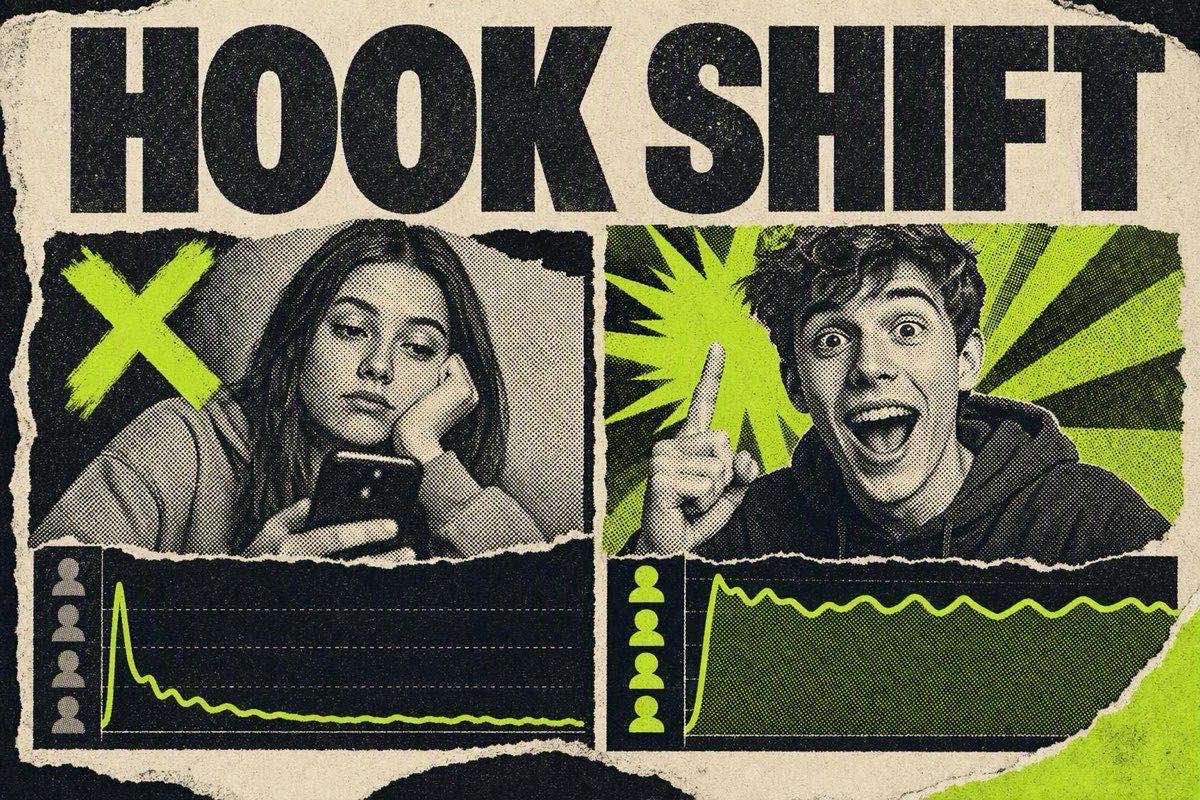
So the hook is not "the first 3 seconds of your video." It is the first frame plus the first line of primary text, working together. Get that pairing right and everything downstream, watch time, click-through rate, cost per acquisition, gets easier. Get it wrong and the rest of the ad never gets seen.
How to Use These Facebook Ad Hook Examples

Three rules before you start copying:
- Swap the variables, keep the mechanism. "The $12 kitchen tool chefs swear by" works because of specificity and curiosity, not because of kitchens. Keep the specific price, keep the insider angle, change the category.
- Match the hook to awareness level. Cold audiences need curiosity and pattern interrupts. Warm audiences respond to proof and urgency. Retargeting can go straight to loss aversion.
- Any number you use must be real. Several examples below use placeholder figures like "47,000 customers." Those are templates. Substitute your actual numbers or cut the claim entirely.
If you want fill-in-the-blank versions of these patterns, the companion piece 50 proven ad hook formulas for e-commerce turns each trigger family into reusable templates.
25 Facebook Ad Hook Examples by Psychological Trigger
Curiosity hooks
1. "The $12 kitchen tool professional chefs don't want you to know about." Specificity plus an information gap. The exact price makes it feel real, and "don't want you to know" creates an open loop the brain wants to close before scrolling on.
2. "I found out why my skin kept breaking out. It wasn't my skincare." A confession plus a subverted assumption. The viewer's brain auto-completes "then what was it?" and the only way to find out is to keep watching.
3. "There's a reason your protein powder makes you bloated." Names a private, unspoken problem, then dangles the explanation. People who have the problem feel seen; people who don't scroll past, which is exactly the filtering you want.
4. "We cut open a $30 pillow and a $180 pillow. Same foam." A mini investigation. Destructive product comparisons are inherently watchable, and the twist ending ("same foam") rewards the viewer for stopping.
5. "Nobody tells you this about running shoes." Pure information-gap play. It works on cold traffic because it requires zero brand awareness, only category interest. Weak version: "Here's a secret." Strong version: name the category.
Social proof hooks
6. "47,000 dog owners switched to this food last year." A specific migration number implies a movement, not a purchase. "Switched" is doing the heavy lifting: it says people abandoned something familiar for this.
7. "The moisturizer with a 40,000-person waitlist." Scarcity and proof in one line. A waitlist is proof that demand exceeds supply, which is more persuasive than any adjective you could write.
8. "My dermatologist asked ME what I was using." Authority reversal. The expert asking the customer flips the expected hierarchy, and flipped expectations stop thumbs. This works best delivered as UGC, a format we cover in the complete guide to UGC ads.
9. "Rated 4.8 stars by people who hate doing laundry." A rating plus an identity. "People who hate doing laundry" tells the viewer whose opinion this is, which makes the number mean something.
10. "This is the water bottle you keep seeing everywhere. Here's why." Names the mere-exposure effect out loud. If the product has organic buzz, this hook converts ambient familiarity into a click.
Contrarian hooks
11. "Stop drinking green smoothies. Seriously." Attacks a habit the audience believes is virtuous. Contrarian hooks outperform in saturated niches because every competitor is saying the opposite thing.
12. "Your expensive running shoes might be why you're injured." Threatens a past purchase decision. Viewers stop to defend their choice, and by then they're already watching your argument.
13. "Cardio isn't why you're not losing weight." Removes blame before selling. Telling people their effort wasn't the problem lowers defensiveness and buys you the next ten seconds.
14. "Everything you know about coffee storage is wrong." The classic myth-buster. It only works if the payoff genuinely surprises, so save this one for products with a real counterintuitive mechanism.
Transformation hooks
15. "Week 1 vs. week 6." The shortest hook on this list, carried entirely by a split-screen visual. Before-and-after remains the most literal demonstration of value an ad can make. Purple's raw egg test and Blendtec's "Will It Blend?" built entire brands on visible demonstration; we break down both in our case studies.
16. "POV: your closet after you finally find jeans that fit." Sells the after-state, not the product. POV framing puts the viewer inside the outcome instead of describing it to them.
17. "From 2 hours of meal prep to 20 minutes." A time-cost delta with specific numbers. Quantified transformations beat vague ones ("save time") every single test.
18. "I gave my morning routine 15 minutes back." First-person transformation with a small, believable claim. Modest numbers often out-convert dramatic ones because they pass the plausibility sniff test.
Urgency and loss-aversion hooks
19. "You're overpaying for sunscreen. Here's the math." Loss framing plus a promised receipt. "Here's the math" signals evidence rather than hype, which suits skeptical, ad-fatigued audiences.
20. "Every night on the wrong pillow costs you tomorrow morning." Converts an ongoing problem into a recurring loss. Ongoing-loss framing creates urgency without a fake countdown timer.
21. "The mistake that's quietly ruining your white sneakers." "Quietly ruining" implies damage already in progress. Prevention hooks work because avoiding loss is more motivating than acquiring gain.
22. "If that tab has been open since Tuesday, this is your sign." Retargeting-specific. It names the exact behavior the viewer is doing, which feels personal without being creepy.
Identity callout hooks
23. "For the people who read the ingredient label first." Filters for a self-image, not a demographic. Viewers who identify with the behavior feel selected, and selection beats persuasion.
24. "Made for runners with wide feet. Nobody else." Deliberate exclusion. Telling most people the product is not for them makes the right people certain it is. Dollar Shave Club's launch video used the same confidence: pick a buyer, talk only to them.
25. "If you own more than three black t-shirts, keep scrolling. Actually, don't." A playful callout plus a pattern interrupt inside the sentence itself. Humor earns forgiveness for the interruption, but only when the product delivers on the setup.
Pair the Hook Line With the Opening Frame
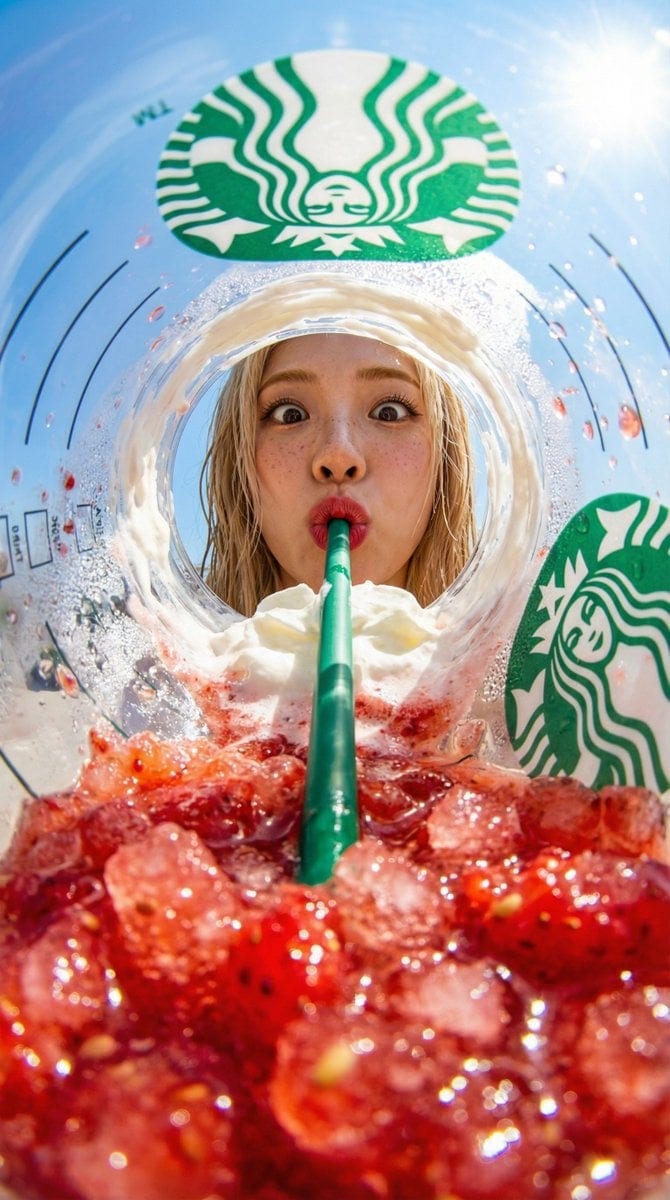
A hook line dies on top of a static logo. On Meta placements the text and visual fire at the same time, so plan them as one unit. Put motion or a human face in the first frame, paint the hook as on-screen text for sound-off viewing, and make sure the frame proves or teases the line rather than repeating it. If you are deciding between formats, our comparison of static ads vs. video ads covers when a still image with a hard-hitting headline beats video outright.
How to Test Facebook Ad Hooks Without Burning Budget
Treat the hook as its own testable variable:
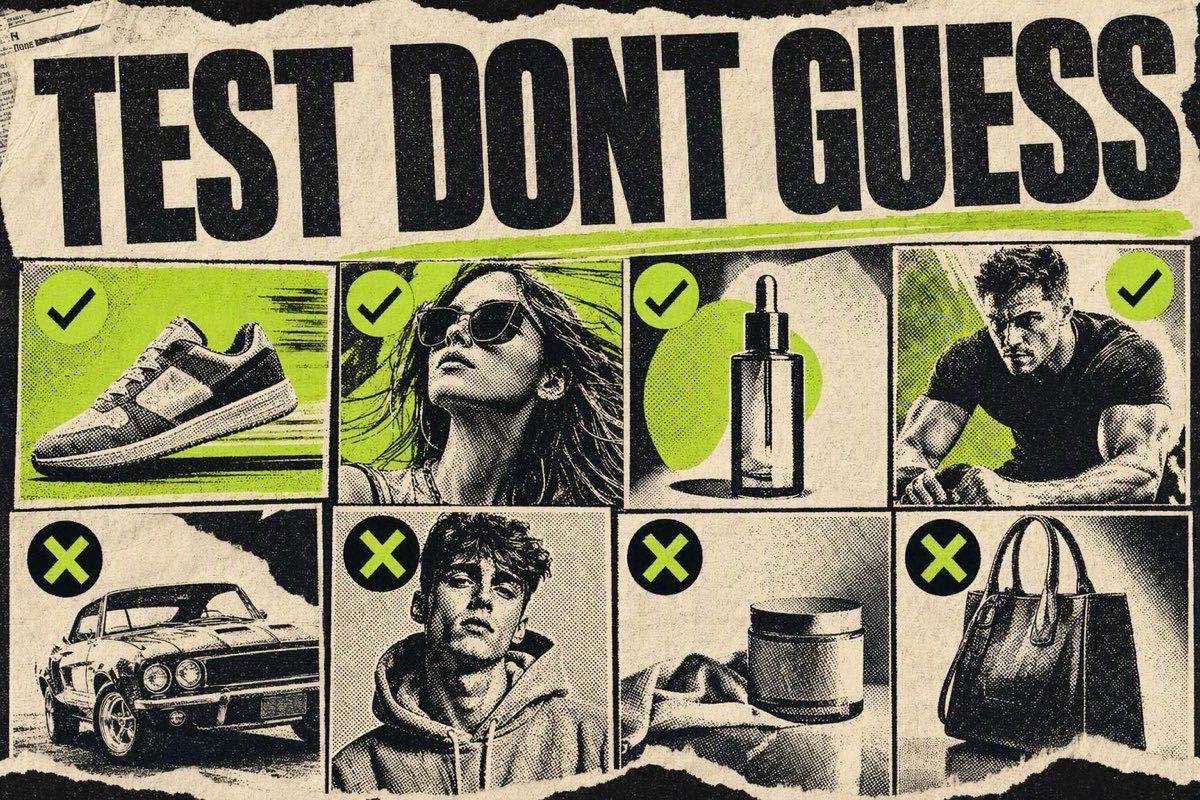
- Hold everything else constant. Same body, same offer, same CTA. Change only the first line and first frame across 3 to 5 variants.
- Judge hooks on hook rate, not ROAS. Hook rate is 3-second video plays divided by impressions. At small budgets, ROAS is noise; hook rate and CTR stabilize much faster.
- Promote winners, then iterate the family. If a contrarian hook wins, test three more contrarian angles before jumping to a new trigger.
The complete guide to ad hooks for e-commerce walks through this workflow step by step, including benchmarks for when to kill a variant. And when you need volume fast, the free hook generator will draft trigger-based variants from your product details in seconds.
FAQ
What is a hook in a Facebook ad?
The hook is the first thing a viewer processes: the opening frame of your creative plus the first line of primary text. Its only job is to stop the scroll and earn the next few seconds. It is not your offer, your brand story, or your CTA.
How long should a Facebook ad hook be?
Keep the hook line under 12 words and the visual payoff inside the first 2 seconds. Meta's feed research shows mobile users spend about 1.7 seconds per piece of content, so anything the hook needs to communicate has to land almost instantly.
How many hooks should I test per ad concept?
Test 3 to 5 hook variants against one constant body and offer. Fewer than 3 tells you nothing about the trigger; more than 5 splits budget too thin to reach significance. Once a trigger family wins, iterate inside that family.
Do these hooks work on Instagram Reels and YouTube Shorts?
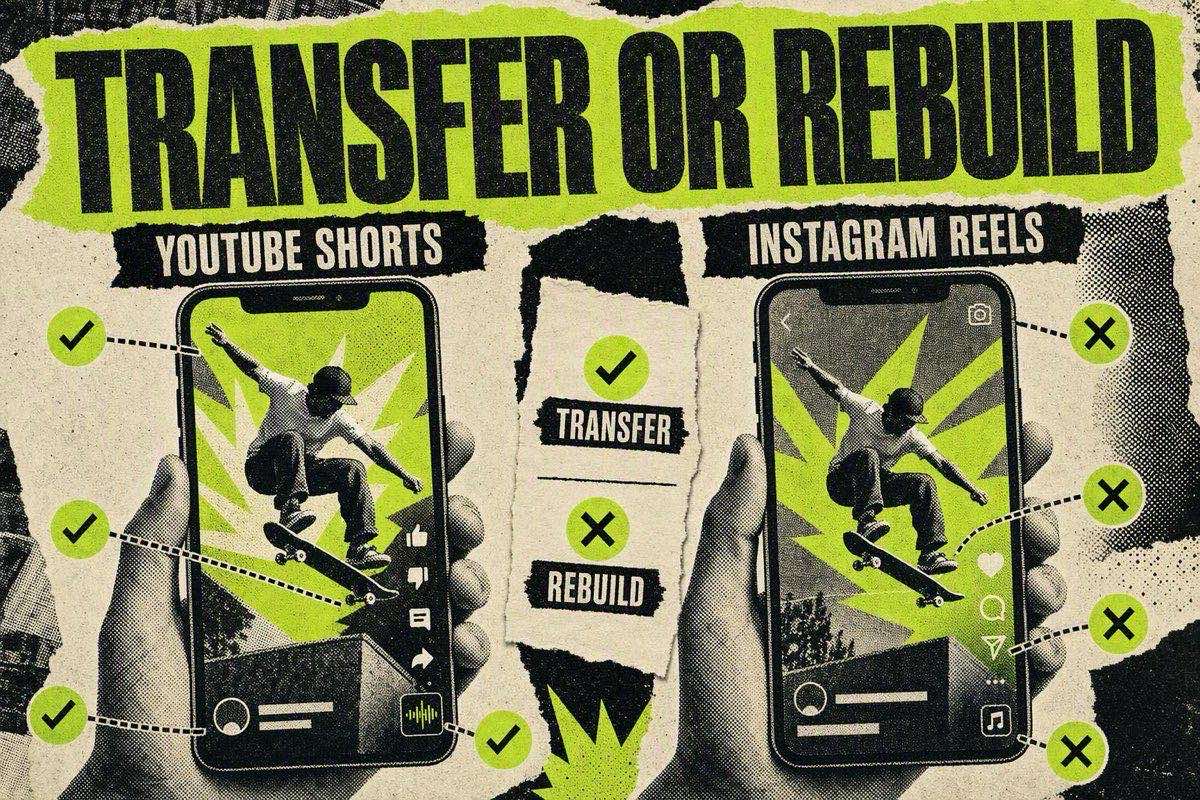
Yes. The psychological triggers are identical across Meta Feed, Instagram Reels, and YouTube Shorts. What changes is the execution: Reels and Shorts favor spoken hooks with on-screen captions and faster cuts, while Feed placements lean harder on the primary-text line and the opening thumbnail frame.
Where do I find new hook ideas when these stop working?
Reverse-engineer ads that are already scaling. Watch what runs unchanged for weeks in Meta Ad Library, then map each one back to its underlying trigger. Our teardowns do exactly that breakdown for you: the hook, the mechanism, and why the whole ad converts.
Steal What's Already Working
Hooks are the highest-ROI words you will write this quarter. Start with the trigger that matches your audience temperature, test in threes, and keep score with hook rate.
Want the shortcut? Browse 1,500+ free AI ad prompts to generate hook-first creatives, study real winning ads in the teardown library, and grab the fill-in-the-blank patterns in 50 proven ad hook formulas. One new winning hook breakdown lands in the newsletter every week.
The AI Ad-Making Kit
$99Make hyperreal AI video and image ads for any brand, with free AI tools. No camera, no agency.
- 10 modules
- 300+ hooks
- 500+ prompts
Canva ad templates, free.
Proven D2C ad layouts. Swap in your product, export, launch.
Browse templates →Want to act on what you just read?
Browse 3,400+ free, Canva-ready ad templates sorted by industry. One click to open, five minutes to customise.
Browse Free Templates