 Chapter 05 / 6
The 6 Research Methods: How to Find and Validate the Right Desire
A brand had 6,000 customers. They sent them a survey. 652 people responded.
A brand had 6,000 customers. They sent them a survey. 652 people responded.
The responses didn't just confirm what the brand thought their product was for. They revealed desires the brand had never thought to build ads around — desires that came directly from customers describing what was happening in their lives when they bought the product, in their own words, unprompted.
That survey became the foundation for a new round of creative testing. The desires it surfaced outperformed everything the brand had been running.
Before you write a single line of ad copy, before you brief a creative team, before you make one more iteration on what you already have — research. Find out what desires are real, how big they are, and how people actually describe them. The language buyers use to describe their own desire is often completely different from the language brands use to describe their product. And the version that converts is the buyer's version, not the brand's.
Here are the six methods, in the order to use them.
Method 1: Break Down Your Product
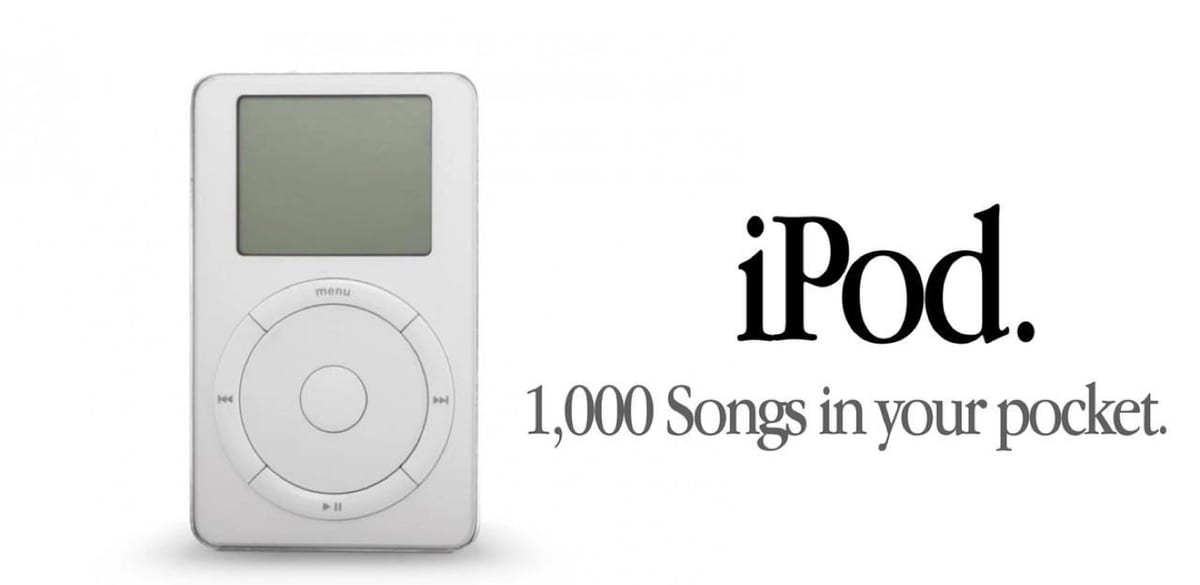
This is the foundation. Do it before anything else.
Every product has layers. Features are what the product physically is or does. Performance is what the feature achieves. Benefits are what the performance means for the customer. Desire is what the customer is ultimately trying to become, feel, or achieve — what they actually give a damn about.
Most brands know their features cold. Most can articulate benefits. Almost none make it all the way to desire before writing their ads.
The exercise: start with your product's main feature and keep asking "so what?" until you get to something emotionally real.
The iPod example:
- Feature: 1 GB of storage
- Performance: Holds 1,000 songs
- Benefit: 1,000 songs in your pocket
- Desire: The freedom to walk around anywhere — the subway, the street, with friends — listening to your music all day, without carrying a clunky CD player
The "so what?" at each step:
- "1 GB of storage" — so what? → You can store 1,000 songs
- "1,000 songs" — so what? → All your music fits in your pocket
- "Music in your pocket" — so what? → You can take it everywhere, you're not tethered to anything, you can move freely and still have your music
The desire isn't a feature. It's a feeling. Freedom. Portability. Liberation from the old constraint.
Do this for every major feature of your product. Each feature may map to a different desire — which means each one is a potential creative angle. Do it manually, without AI. The process forces you to understand your own product's positioning at a level that surfaces conviction.
Method 2: Customer Survey
If you have existing customers, this is the single most valuable research source you have — because it's real people, not your assumptions about real people.
The setup: send a survey to all-time customers, but exclude the last 30 days of purchases. The reason is critical. You want to talk to people who have already experienced the product, not people who just bought it and haven't had time to assess whether it delivered. Someone who bought three months ago knows exactly what the product did and didn't do for them.
To get responses, run a giveaway. A $100 Amazon gift card works well. People will fill out a survey if there's something in it for them. Without an incentive, response rates on customer surveys are typically under 5%. With a $100 gift card drawing, you can realistically get 10-15% response rates from your list.
The questions you want answered:
- Why did you buy this product? (What was going on in your life at the time?)
- What problem were you trying to solve?
- What desired state were you trying to reach? What did you want your life to look like after?
- What do you love about it now that you have it?
- What almost stopped you from buying?
The gold in survey responses is in the language. Buyers describe their desires in specific, concrete, emotionally honest terms that no copywriter can manufacture. A first-time mom describing her memory before and after having a baby doesn't use clinical language — she says things like "before having my baby, I had the memory of a child. You couldn't tell me anything that I couldn't bring up years later with perfect accuracy." That sentence is a hook. Verbatim.
Look for the moments in survey responses where someone describes their desired state vividly. That's your ad copy. Not paraphrased. Not cleaned up. Their exact words, in their exact voice.
Method 3: YouTube and TikTok Research

This method gives you two things: confirmation that a desire is real, and a proxy measurement for how big the market is.
The process: search the desire — not your product, not your category, the desire itself — on both YouTube and TikTok.
Pay attention to view count on the results.
If you search a desire on TikTok and see a dozen videos with 800 to 2,000 views each, there isn't much of a market here. People aren't watching content about this. They don't care enough about it to consume it passively.
If you search a desire and see videos with 2 million, 8 million, 20 million views — that's a massive market. Tens of millions of people cared enough to watch content about this desire. That's a large, active pool of buyers.
Cross-reference the two platforms. A desire with large view counts on both YouTube and TikTok is validated. A desire that gets traction on one but not the other is worth examining — the gap might tell you something about which demographic holds it more intensely.
This method also surfaces how people talk about the desire in video content — which gives you hooks, scenarios, and language to bring into your creative.
Method 4: Reddit Research
Reddit is one of the most valuable desire-research tools available, and it's almost entirely underused by Facebook advertisers.
The specific thing to look for: threads with 50, 60, 80, 100 or more comments. That level of comment engagement tells you the topic struck a nerve. People felt strongly enough about it to respond — which means the desire (or its opposite, the pain) is real and specific.
In those threads, read the comments looking for the desired state. Not the product. Not the solution. What is the person describing that they want their life to look like?
A real example: someone posted about Mom Brain — the cognitive fog and memory loss many women experience after giving birth. A first-time mom commented:
"Before having my baby, I had the memory of a child. You couldn't tell me anything that I couldn't bring up years later with perfect accuracy. I also had an extensive vocabulary."
She wasn't describing a product she wanted. She was describing who she used to be — the desired state she's trying to get back to. She wants her memory and sharpness returned. She wants to be the version of herself that existed before the pregnancy.
If you're selling a supplement or a brain-health product that helps with cognitive function, that comment just handed you your entire positioning. In the customer's own voice. For free. And the fact that it's in a thread with 80+ comments tells you this desire is widely shared, not just this one woman's experience.
The Reddit research method: search the desire, the problem, or the life situation in Reddit's search. Filter by "Top" results. Find threads with high comment counts. Read the comments, specifically looking for vivid descriptions of current state (the pain) and desired state (what they want instead). Copy the phrases that feel viscerally real.
Method 5: Competitor 5-Star Reviews
This method tells you what desire people are actually buying your product category for — because 5-star reviews are where customers describe the desired state they reached.
Look at competitors' 5-star reviews, not 1-star. The 1-stars tell you what went wrong. The 5-stars tell you what people were trying to achieve — and the fact that they're celebrating it in a review tells you the product delivered it.
What are they celebrating? What result made them happy enough to write 500 words about it? That's the desire. That's what people are buying the product to experience.
Two strategic questions once you've identified the dominant desire in competitor reviews:
First: Do I want to go after this same desire and just build better creative? If the competitor's ads around this desire aren't that impressive — production quality is low, hooks are weak, targeting seems broad — you can go after the same desire and outspend them with better creative execution. This is how some brands have beaten AG1, a supplement company with a massive marketing budget, by making a massive multi-million dollar investment into influencer creative that speaks to the same desire AG1 goes after but does it better and more authentically.
Second: Is this desire already saturated, and do I need to find a completely different one? If the competitor is dominant in this desire space and outspending you by 10x, fighting on the same terrain is difficult. Find a different desire your product can serve — one they haven't touched — and build a moat there instead.
Method 6: TrendTrack Research
TrendTrack is an ad library tool that lets you browse high-performing ads across different advertisers and categories. The research method here is slightly different from the others: instead of looking for desires directly, you're looking for ad structures that are working in other niches — and pulling them into your product's desire space.
Here's the specific workflow:
- Pull up ads from a completely different niche than yours. Not a competitor. A totally different category.
- Identify their top-performing video ad and top-performing image ad based on longevity (how long the ad has been running is a proxy for performance).
- Capture the structure: how do they open? What do they call out? How do they build tension? When do they introduce the mechanism? Where does the product enter?
A concrete example: researching for a breath spray client. The ads from a testosterone product company (entirely different category) are pulled. Their top video ad: "I almost started testosterone injections until I found this." Their top image ad: "Your grandfather had more testosterone at 60 than you at 35."
Now take that structure and apply it to the breath spray product across different desires:
- The testosterone ad structure applied to professional confidence desire: "I lost a client and I didn't realize it was my breath until months later."
- Applied to social anxiety desire: "For years I covered my mouth every time I talked to someone. I thought that was just me."
- Applied to family connection desire: "My grandmother told me my breath smelled like campfire. She wasn't wrong."
The structure travels. The specific hook language, the tension-building, the way the problem is revealed — these structural elements work across desires and across categories. TrendTrack gives you access to proven structural frameworks from outside your niche, which means you're bringing creative angles to your market that nobody there has seen before.
The critical distinction: you're not copying ads. You're pulling the structure. The desire you apply it to is yours, discovered through the other five research methods. The structure is borrowed. The positioning is original.
Putting the six methods together


These six methods aren't independent — they build on each other.
Method 1 (product breakdown) gives you a starting list of possible desires to investigate.
Methods 2-5 (survey, YouTube/TikTok, Reddit, competitor reviews) validate which desires are real, how large the markets are, and what language buyers use to describe them.
Method 6 (TrendTrack) gives you proven creative structures from outside your niche to apply to the desires you've validated.
Do Method 1 manually first. Then use methods 2-5 to validate and prioritize. Save Method 6 for when you're ready to write.
The research phase should happen before any creative brief is written. Not concurrently. Not after. Before. The creative is only as good as the desire research behind it — because a brilliantly executed ad built on the wrong desire will always underperform a decent ad built on exactly the right one.
The checklist
- Do the Feature → Performance → Benefit → Desire chain manually before opening any research tool
- Survey existing customers with a $100 gift card incentive, excluding the last 30 days of buyers — you want people who've already experienced the product
- Search the desire on TikTok and YouTube and compare view counts across your candidate desires — highest views means biggest market
- Find Reddit threads with 50+ comments about the desire or problem — read for vivid descriptions of the desired state in the buyer's own language
- Read competitor 5-star reviews, not 1-star — what are happy customers celebrating? That's the desire
- Pull TrendTrack ads from a completely different niche — capture the structure, not the copy
- Do all research before writing a single word of copy — the creative is only as good as the desire it's built on
Next: [Writing Desire-Led Ads with AI — The Complete Workflow and the 6 Mistakes That Kill Scaling →](06-writing-desire-led-ads.md)