An ad hook is the first line and first frame of your ad, and it does one job: stop the scroll. This guide covers what hooks are, why they decide your CTR, how a hook generator works and how to get good output from one, plus a starter hook library and a testing workflow built for e-commerce teams.
Whether you write hooks by hand or draft them with our free hook generator, the principles are the same. Master them once and every creative you ship gets cheaper to test.
What an Ad Hook Is (and What It Isn't)
The hook is everything a viewer processes in the first moment of contact with your ad. On Meta placements that means three things firing at once: the opening visual frame, the first line of primary text, and (for video) the first spoken words or on-screen caption.
What the hook is not: your brand story, your feature list, your discount, or your CTA. Those all matter, but they live downstream. A brilliant offer behind a weak hook performs like no offer at all, because almost nobody arrives to see it.
Think of every ad as a two-stage sale. Stage one sells the next three seconds. Stage two sells the product. Most e-commerce teams obsess over stage two and improvise stage one, which is exactly backwards given where the drop-off happens.
Why Hooks Decide Your Click-Through Rate
The math of attention is brutal. Meta's feed research found people spend an average of 1.7 seconds with a piece of content on mobile, and that a quarter-second of exposure is enough for measurable ad recall. Your hook is evaluated pre-consciously, before anyone decides to give your ad a chance.
Sound-off viewing raises the bar further. Feeds autoplay silently, which is why Meta reports that captioned video ads increase view time by an average of 12% in its internal tests. If your hook only works with audio, it does not work for a large share of your impressions.
The compounding effect is what makes hooks the highest-ROI creative element. A stronger hook lifts 3-second plays, which lifts watch time and CTR, which feeds the auction better engagement signals, which lowers your delivery costs. Same product, same offer, same landing page. The only thing that changed was the first two seconds.
How to measure whether a hook works
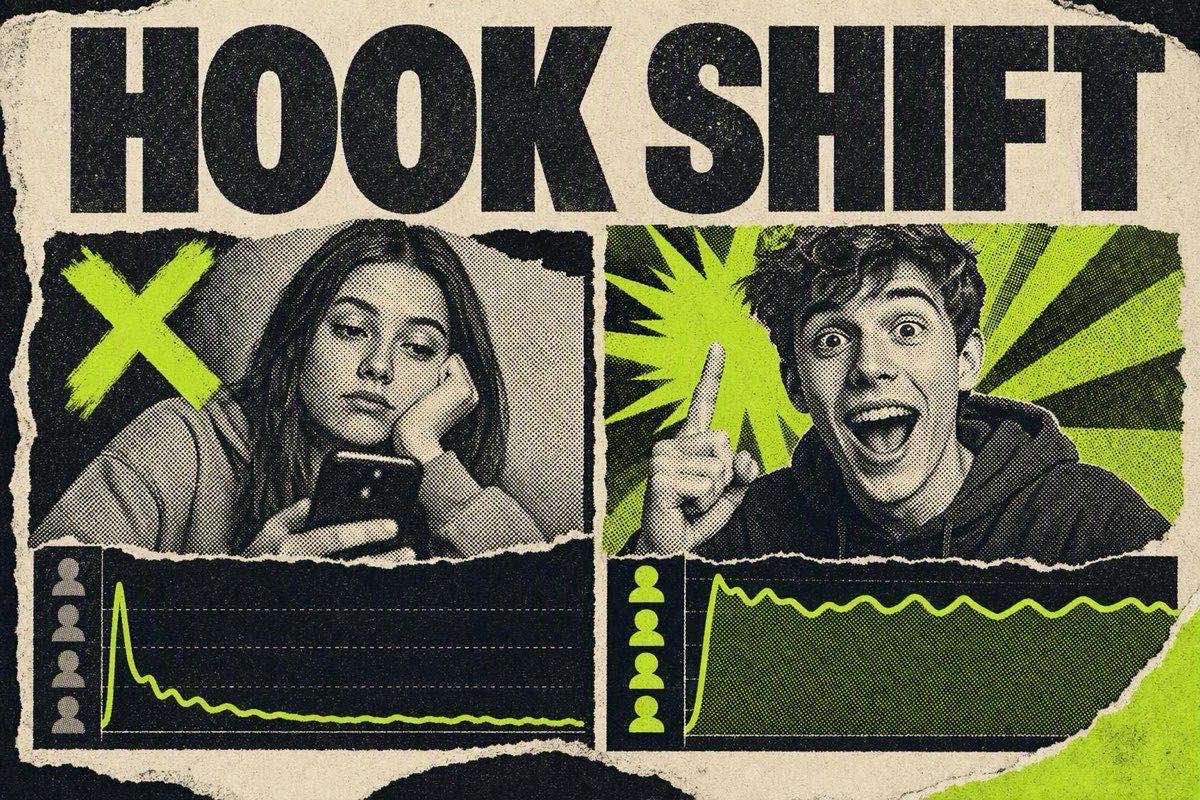
Two metrics isolate the hook from the rest of the ad. Hook rate is 3-second video plays divided by impressions; it tells you what percentage of people the opening actually stopped. Hold rate is ThruPlays divided by 3-second plays; it tells you whether the ad kept the people the hook caught. Read them together. A high hook rate with a weak hold rate means the opening over-promises and the body under-delivers. A low hook rate with a strong hold rate means the ad is good but invisible, so fix the first frame before touching anything else. Neither metric needs purchase volume to be readable, which is why hook testing stays cheap even for small accounts.
How a Hook Generator Works (and When to Use One)

A hook generator is a tool that drafts opening lines from your inputs, typically your product, audience, pain point, and desired angle, by mapping them onto proven hook structures: curiosity gaps, contrarian statements, POV framings, proof claims, urgency patterns.
Under the hood, good generators are pattern engines. The persuasion mechanisms in advertising have been stable for decades; what changes is the surface language, the platform format, and the cultural references. A generator applies those stable mechanisms to your specific variables faster than you can brainstorm, which makes it a volume tool: its job is to hand you 20 candidate hooks in a minute so you can spend your judgment on selection instead of a blank page.
When to use one: at the start of a new creative batch, when a winning ad is fatiguing and you need adjacent angles, or when you are entering a new audience segment and need hooks reframed around a different pain point. When not to: as a replacement for reading your own reviews. The generator gives you structure; your customers give you the words that actually convert.
Ours is free and built specifically for ad hooks: try the hook generator. Pair it with the 1,500+ AI prompt library when you want to take a winning hook and generate the full creative around it.
Getting Better Output From a Hook Generator
The gap between mediocre and excellent generator output is almost entirely in the inputs. Five rules:
- Feed it specifics, not categories. "Leggings that roll down during squats" produces sharper hooks than "activewear." The narrower the pain, the more the output sounds like a person wrote it.
- Name one customer, not a demographic. "New runners training for their first 10K" beats "fitness enthusiasts, 25 to 44." Hooks written to a demographic read like ads; hooks written to a person read like recognition.
- Include the objection. If buyers hesitate because "memory foam sleeps hot," say so. Objection-aware hooks ("Cooling foam that doesn't feel like a science experiment") pre-handle the reason people bounce.
- Generate in volume, keep ruthlessly. Produce 20, shortlist 5, test 3. If you keep more than a quarter of the output, you are not being selective enough.
- Rewrite the winner in your customers' words. Take the best structure and swap its vocabulary for phrases lifted from reviews and DMs. Structure from the machine, language from the humans.
The Starter Hook Library
Twenty hooks to adapt today, grouped by trigger. Placeholder numbers must be replaced with your real ones. For 25 more finished examples with the psychology explained, see our Facebook ad hook examples; for the fill-in-the-blank patterns behind them, the 50 ad hook formulas for e-commerce is the full reference.
Curiosity
- "The $14 fix for every white sneaker you've ever ruined."
- "There's a reason your candles stop smelling after a week."
- "We cut a $200 pillow in half. You should see what's inside."
- "Nobody tells you this before you buy a standing desk."
Proof and specificity
- "12,000 five-star reviews mention the same zipper."
- "Sold out four times last year. Restocked today."
- "My physio asked where I got it. Twice."
- "I tested it for 30 days so you don't have to."
Contrarian
- "Stop paying for ten skincare steps. You need three."
- "Your detergent isn't the problem. Your gym bag is."
- "Expensive knives are wasted on most kitchens. Here's why."
- "You don't need a bigger closet. You need a better system."
Transformation
- "Day 1 vs. day 30 on a silk pillowcase."
- "From cable chaos to labeled and hidden in 10 minutes."
- "Watch a rusted pan turn non-stick in 60 seconds."
- "POV: your morning after switching to a sunrise alarm."
Urgency and loss
- "Every run in dead shoes is a tax on your knees."
- "If it's still in your cart, this is your sign."
- "Your toothbrush head expired a month ago."
- "Don't buy another office chair until you've seen this."
The Hook Testing Workflow
A hook library without a testing loop is decoration. The workflow we recommend:
- Isolate the variable. One body, one offer, one CTA. Only the hook changes. If you vary two things at once you learn nothing from either.
- Launch 3 to 5 hook variants from at most two trigger families. More than five splits budget too thin to read.
- Score on hook rate and CTR, not ROAS. Hook rate is 3-second video plays divided by impressions; it stabilizes quickly at small spend. Purchase metrics need volume that hook tests rarely get.
- Set a kill rule before launch. For example: after 2,000 impressions, cut anything with a hook rate 20% below the batch leader. Pre-committed rules stop you from romancing a losing variant.
- Iterate inside the winning family. A winning contrarian hook means three more contrarian angles next batch, not a jump to a new trigger.
- Log everything. Keep a running sheet of hook, trigger family, hook rate, and CTR. After a quarter you will have a private benchmark that no ad teardown or competitor spying can match.
Hooks by Placement: Feed, Reels, and Shorts
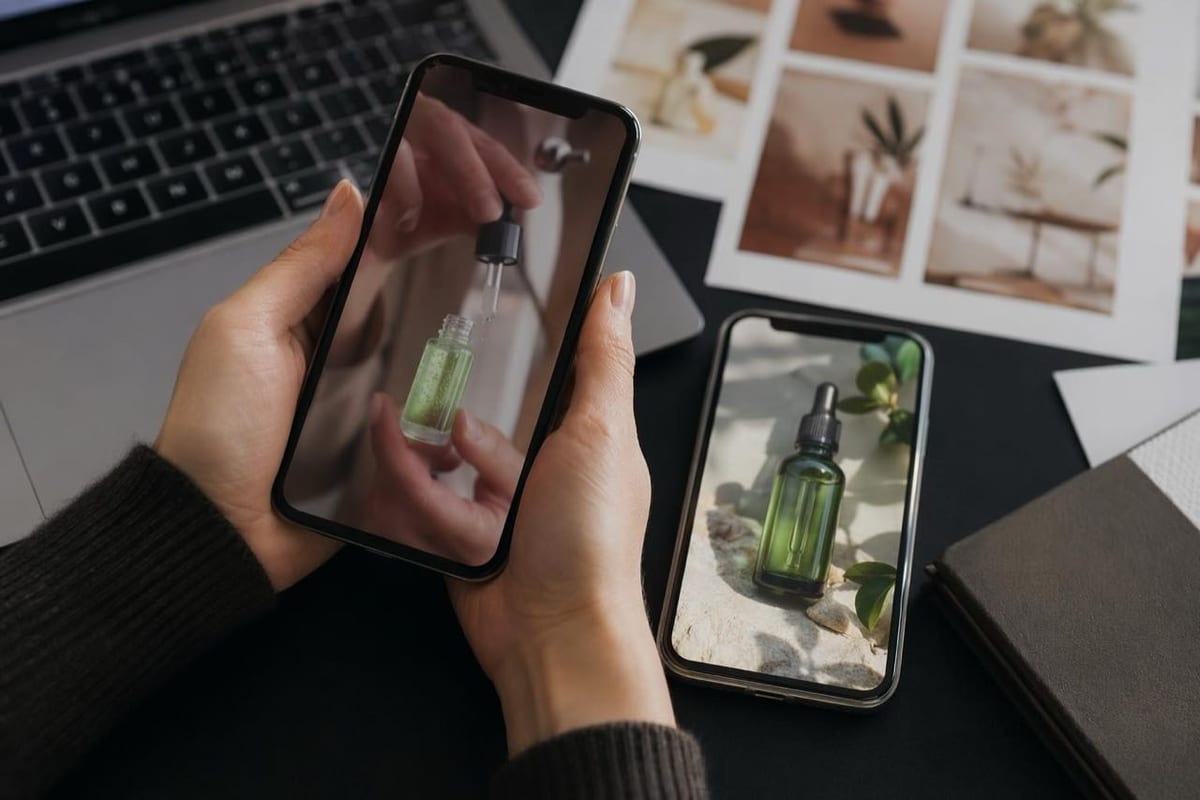
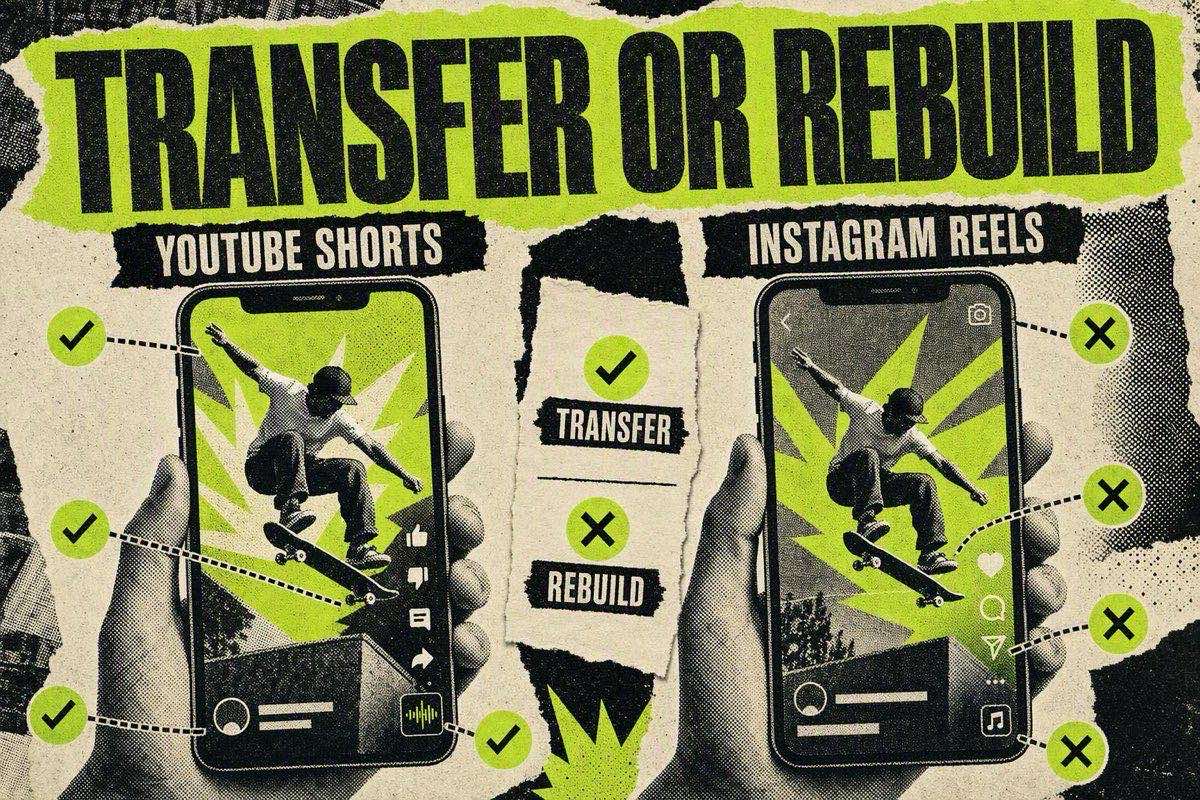
The trigger travels; the execution changes. In Meta Feed, the primary-text line and the thumbnail carry the hook, so lead with your strongest sentence and make the first frame legible at thumbnail size. In Instagram Reels and YouTube Shorts, the hook must be spoken in the first two seconds and mirrored in on-screen captions, since viewers decide before reading any caption text. The same short-video conventions apply on TikTok for markets where it operates. If your product demo is inherently visual, a strong static image with a headline hook can outperform video; our static ads vs. video ads breakdown covers how to choose.
FAQ
What is a hook generator?
A hook generator is a tool that drafts ad opening lines from your inputs, product, audience, and pain point, by applying proven persuasion structures like curiosity gaps and contrarian statements. It is a volume tool: it produces candidates fast so you can select and refine instead of starting blank.
Are AI hook generators worth using?
Yes, for the drafting stage. They compress an hour of brainstorming into a minute and rarely miss a proven structure. They cannot know your customers' language, so the workflow that wins is generate in volume, shortlist, then rewrite winners using phrases from your actual reviews.
What makes a good ad hook for e-commerce?
A good e-commerce hook names a specific pain or desire, works without sound, and pays off visually in the first frame. Specificity beats cleverness: "leggings that don't roll down during squats" outperforms wordplay because the right buyer recognizes their exact problem instantly.
How long should an ad hook be?
Keep spoken hooks under 3 seconds and written hook lines under 12 words. Meta's research shows mobile users average 1.7 seconds per piece of feed content, so the hook must land its core idea inside a single glance, with the visual carrying half the work.
How many hooks should I test before scaling an ad?
Test 3 to 5 hook variants per concept with everything else held constant. Kill underperformers on hook rate after about 2,000 impressions each, then iterate three new angles inside the winning trigger family. Most teams find a scalable hook within two to three batches.
Build Your Hook System This Week
Hooks are a system, not a lottery: a library of triggers, a generator for volume, customer language for belief, and a testing loop that keeps score. Set that up once and every future creative starts from third base.
Start now: draft 20 candidates with the free hook generator, steal proven structures from 1,500+ free AI ad prompts, and study how scaling ads execute these triggers in the teardown library. One new winning hook breakdown hits the newsletter every week.
The AI Ad-Making Kit
$99Make hyperreal AI video and image ads for any brand, with free AI tools. No camera, no agency.
- 10 modules
- 300+ hooks
- 500+ prompts
Canva ad templates, free.
Proven D2C ad layouts. Swap in your product, export, launch.
Browse templates →Want to act on what you just read?
Browse 3,400+ free, Canva-ready ad templates sorted by industry. One click to open, five minutes to customise.
Browse Free Templates