★ THE CREATIVE ADS COURSE · STRATEGY, NOT SCREENSHOTS
Stop copying other people’s ads. Start deciding what to make.
Everyone has the same folder of competitor screenshots. It does not work, because a screenshot captures the packaging and leaves the argument behind. This is the system for deriving the ad yourself: which angle, which format, which hook, aimed at which stage of knowing.
🔒 One-time payment · Lifetime access & updates · Read online, progress saved
You can see the format. You cannot see the decision behind it.
When you copy an ad, two of the five things that made it work are visible: the format and the hook. The three that mattered most are not. Who it was for, what they already believed, and which argument would move them all happened in research, before anything was filmed.
So you reproduce the packaging around an argument you do not have, aimed at an audience whose beliefs you never established. The ad looks right and says nothing. It is also why a format that works spectacularly for one brand does nothing for another in the same category.
- Every month starts from zero, because a win taught you nothing transferable
- Three angles and forty headlines, and testing has stopped producing gains
- Costs climbing, so you book another shoot that fixes nothing
- A winner appears and nobody can say why, so it cannot be repeated
Frameworks you can actually use on Monday.
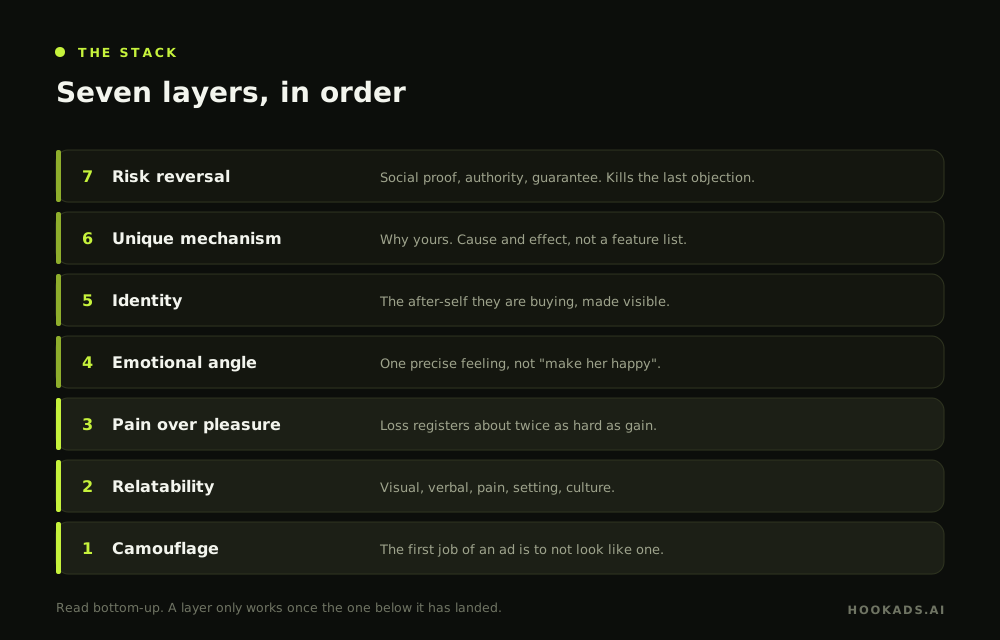
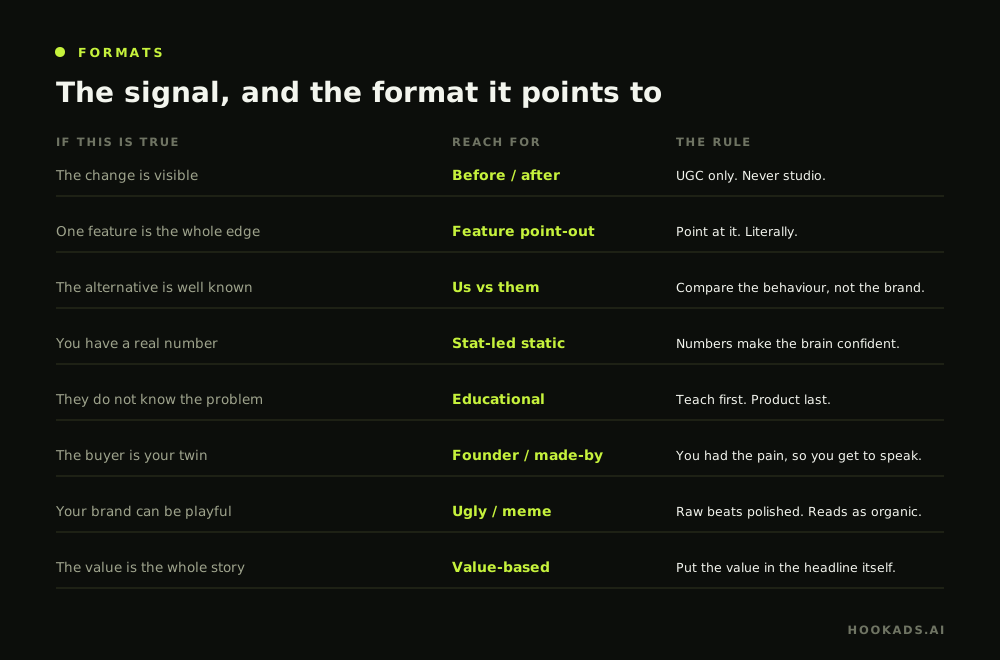
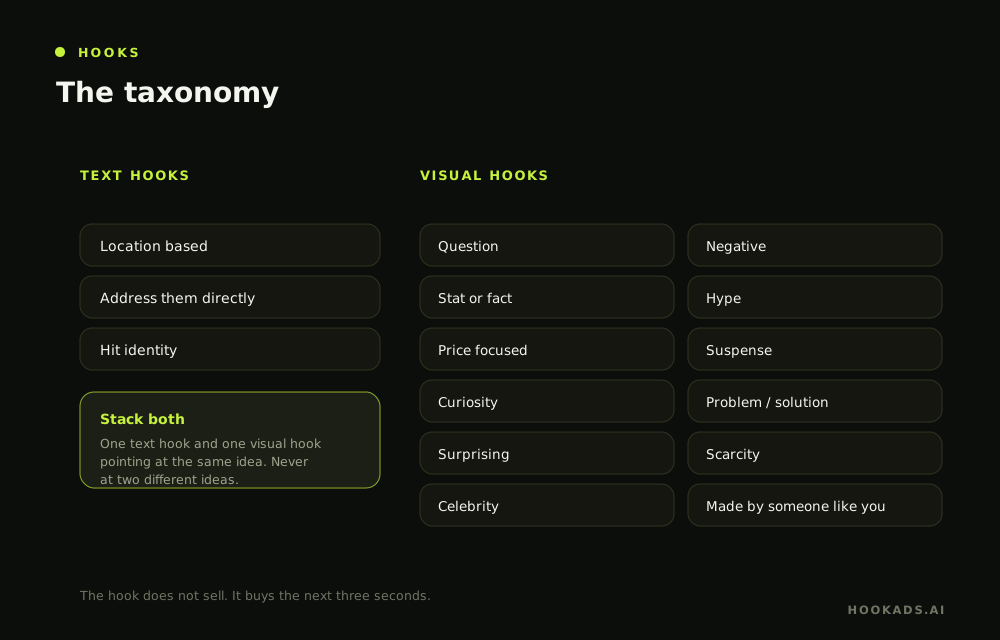
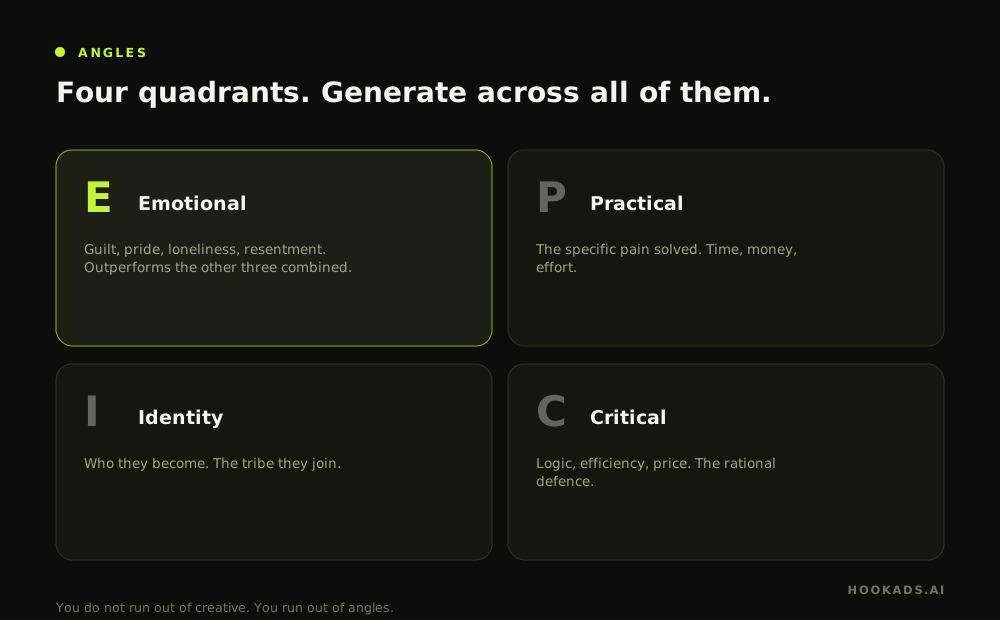
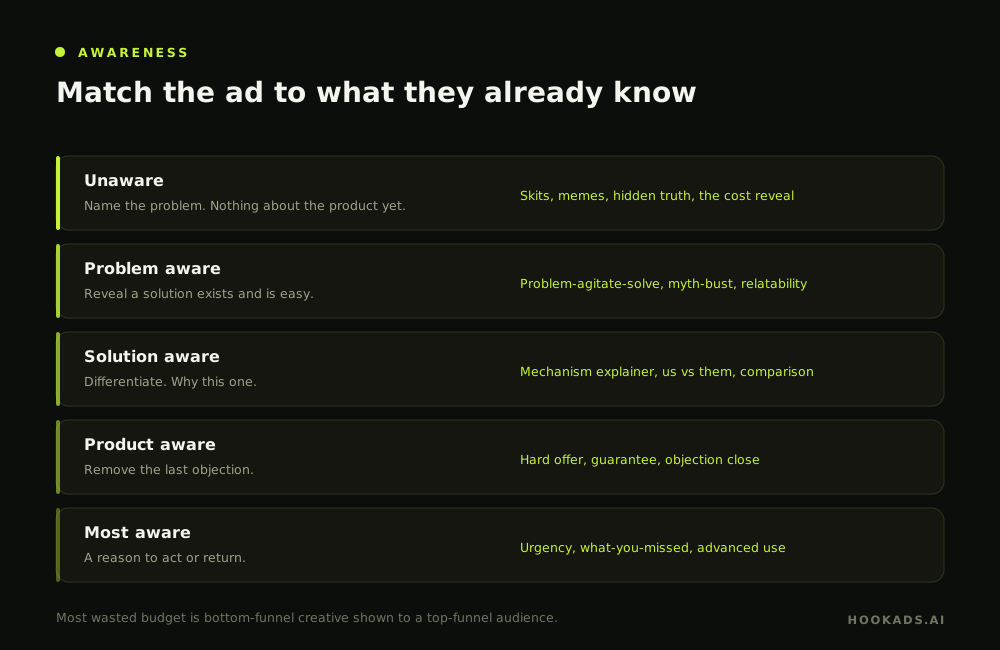
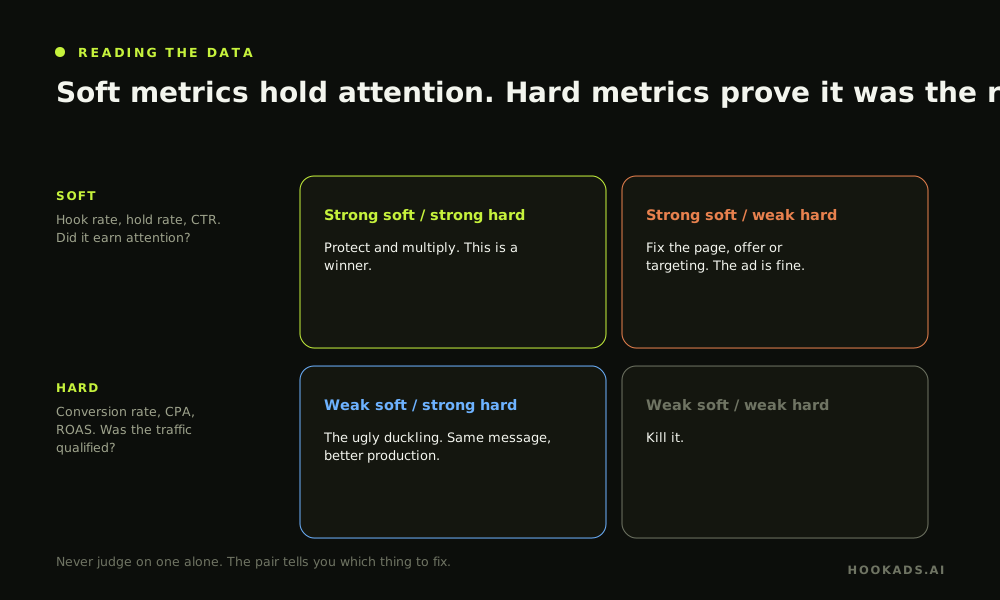
These are the real diagrams from inside the lessons, not mock-ups. Every one of them is a decision aid: you bring a product, and it tells you what to do next.
Eleven modules. Research to a repeatable system.
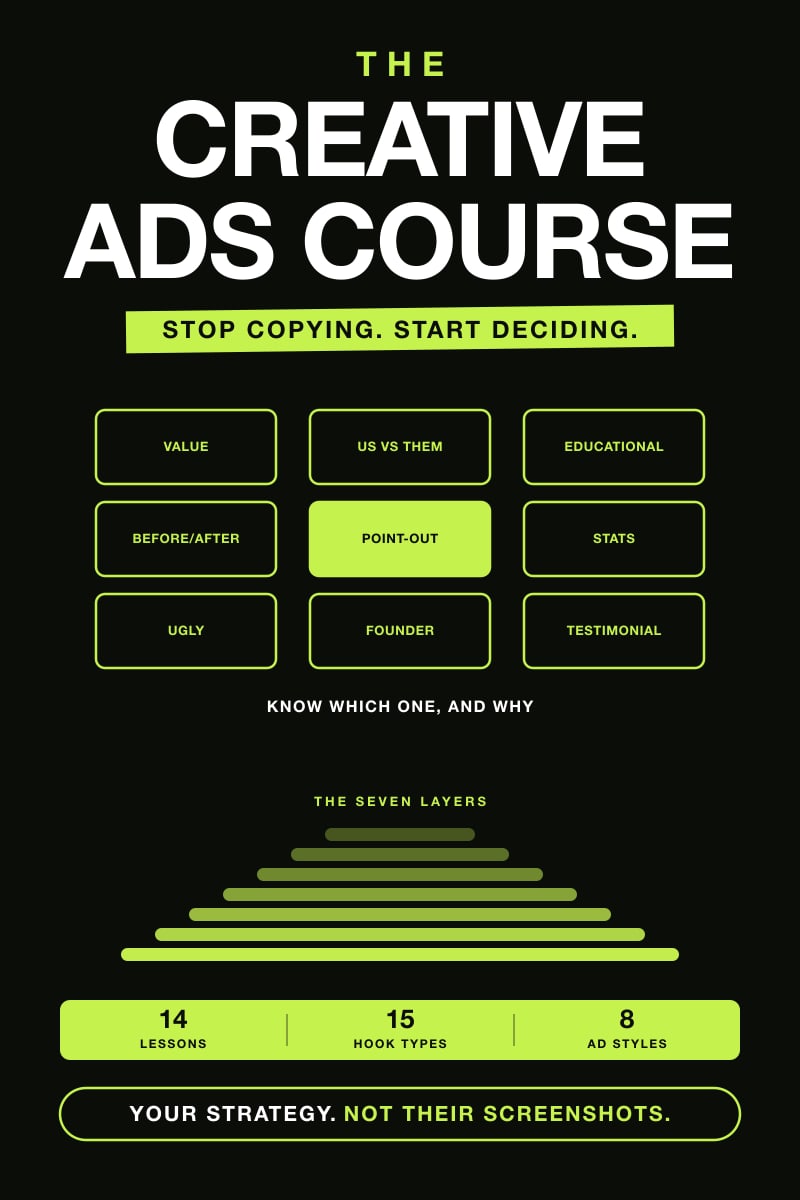
14 lessons, in the order you should think rather than the order most people work in. Psychology before angles, angles before formats, formats before hooks, and production last — which is exactly backwards from how a swipe folder makes you work.
Start here
Why most ads fail
Not budget, not the algorithm, not production quality. The five decisions behind every ad, and why copying captures the packaging and leaves the argument behind.
Psychology
The seven layers
Camouflage, relatability, pain over pleasure, the emotional angle, identity, the unique mechanism, risk reversal. In order, because each one only works once the one below it has landed.
Angles
Twenty angles for one product
The EPIC quadrants, the ten lenses, and where the raw material actually comes from — your three-star reviews, churn reasons and competitors’ comment sections.
Formats
The library, and the signal for each
Value-based, feature point-out, us vs them, statistic-led, educational, ugly, founder, testimonial, quirky. What each is for and the condition that has to be true before it works.
Formats
The rules that get you rejected
Before-and-after must be UGC not studio, the two words you cannot use, the personal-attributes trap, and why repeated rejections cost more than the ads.
Hooks
The full taxonomy
Three text hooks including the negative frame, twelve visual hooks, how to stack them, and the very common hook mistake that raises costs while the metrics look healthy.
Styles
Eight ways to shoot it
Interview, podcast, tap-tap, first person, in-store, ad review, ask-me-anything, emotional bait. What each fits, and how to pick from what you can actually make.
Statics
Twenty-nine concepts, and stacking
Hook-first, proof-first, offer-first, education-first, social-first, product-first, demand. Then the move that turns a list into unlimited variations.
Writing
Gut, brain, pocket
The structure, why the middle is the part everyone thins out, the mechanism that makes a claim believable, and the read-aloud test that catches copy written for the eye.
Testing
Tests that produce knowledge
One concept per ad set, equal budgets, the two protection rules, soft against hard metrics, retention surgery, and reading a losing ad properly.
The system
One winner becomes ten
The three winner types, the four iteration ladders, the 80/20 rule for iteration, and the weekly loop with the building-blocks repository that makes it compound.
Who this is for, and who it is not.
Get this if
- You run ads for clients and want a method anyone on the team can operate
- You are the founder and also the person writing the ads
- Your testing has plateaued and you suspect it is the angles, not the execution
- You want to know why something worked, not just that it did
- You are tired of rebuilding your creative process every quarter
Skip it if
- You want done-for-you creative rather than a method
- You need case studies with revenue screenshots — there are none here, deliberately
- You are looking for a list of templates to copy, which is the thing this argues against
- Your offer does not convert yet. Fix that first; no creative rescues it
There is not a single fabricated result in this course. No invented case studies, no “we scaled this to seven figures”, no dashboard I cannot show you. You get the framework, the real ad examples I have collected, and the mechanism behind why they work. Where something is my opinion rather than a measured fact, it says so.
— PiyushBefore you buy.
Both. The method is the same; agencies get more out of the system and repository chapters because they run it across accounts, and founders get more out of the angle and format chapters because they are usually the bottleneck.
No. A large part of the course is about making the cost of finding out approach zero — statics that isolate one claim, angle tests before production, and iterating on proven blocks instead of starting over.
The psychology, angles, hooks, formats and testing method apply anywhere. The platform-rules lesson and some of the diagnostics are written against Meta, because that is where most of this creative runs.
No, and that is deliberate. There are no invented results anywhere in this course. What you get is the framework, real ad examples I can actually show you, and the mechanism behind why each one works. Where something is my opinion rather than a measured fact, it says so.
The playbooks are narrow and applied — memes, or app installs. This is the general system underneath all of them: how to decide what ad to make for any product, including one you have never sold.
No. It is written, illustrated with real ad examples and framework diagrams, and read online with your progress saved. You can go through it at your own pace and come back to any lesson.
The folder of screenshots is not a strategy.
14 lessons, eleven modules, every framework above. Read lesson one free and decide from there.