Water is water. Same molecule, regardless of brand. So how do you sell it for a premium and get people to tattoo your logo on their bodies?
Liquid Death's answer: don't compete in the water category. Compete in the culture category.
What Liquid Death Is Actually Selling
Liquid Death launched in 2019 with a simple product: mountain water in a 16.9 oz aluminum can. Canned water was not new. What was new was the branding: a skull logo, a black-and-silver palette, a tagline ("Murder Your Thirst") that sounds like a metal album, and marketing copy that consistently parodies the wellness-speak of its competitors.
Founder Mike Cessario has been public about the core insight in multiple interviews, including with Forbes: "The goal was to make the most unnecessarily death-metal canned water possible." The joke is the product concept. But the joke is also a precise positioning strategy.
By the end of 2022, Liquid Death had reached a reported $130 million in revenue and a valuation of $700 million in its Series D round, according to TechCrunch's reporting on the funding. By 2023, the brand claimed to be the top-selling sparkling water on Amazon, per Inc. Magazine's coverage.
The Hook Mechanism: Category Rejection
Most water brands compete on the same variables: purity source, hydration messaging, athletic association, or sustainability packaging. Liquid Death's creative consistently does the opposite of its category.
Where Voss and Evian show alpine serenity and clean white backgrounds, Liquid Death runs ads with heavy metal voiceovers, "Sell Your Soul" bundle page copy, and influencer collaborations with Tony Hawk and Travis Barker : athletes and musicians from skateboarding and rock culture, not wellness or triathlon circles.
The hook mechanism is category rejection made visible. Every piece of Liquid Death creative signals: "If you find the wellness water category annoying, this is your brand."
This is a powerful targeting mechanism because it self-selects for a specific audience psychographic : people who distrust wellness marketing, people who associate with counterculture aesthetics, people who find humor in the contrast between death-metal imagery and something as mundane as staying hydrated : while simultaneously generating free press from media that writes about "the brand that puts water in beer cans."
The Ad Creative Pattern
Liquid Death's paid and organic creative follows a repeatable pattern:
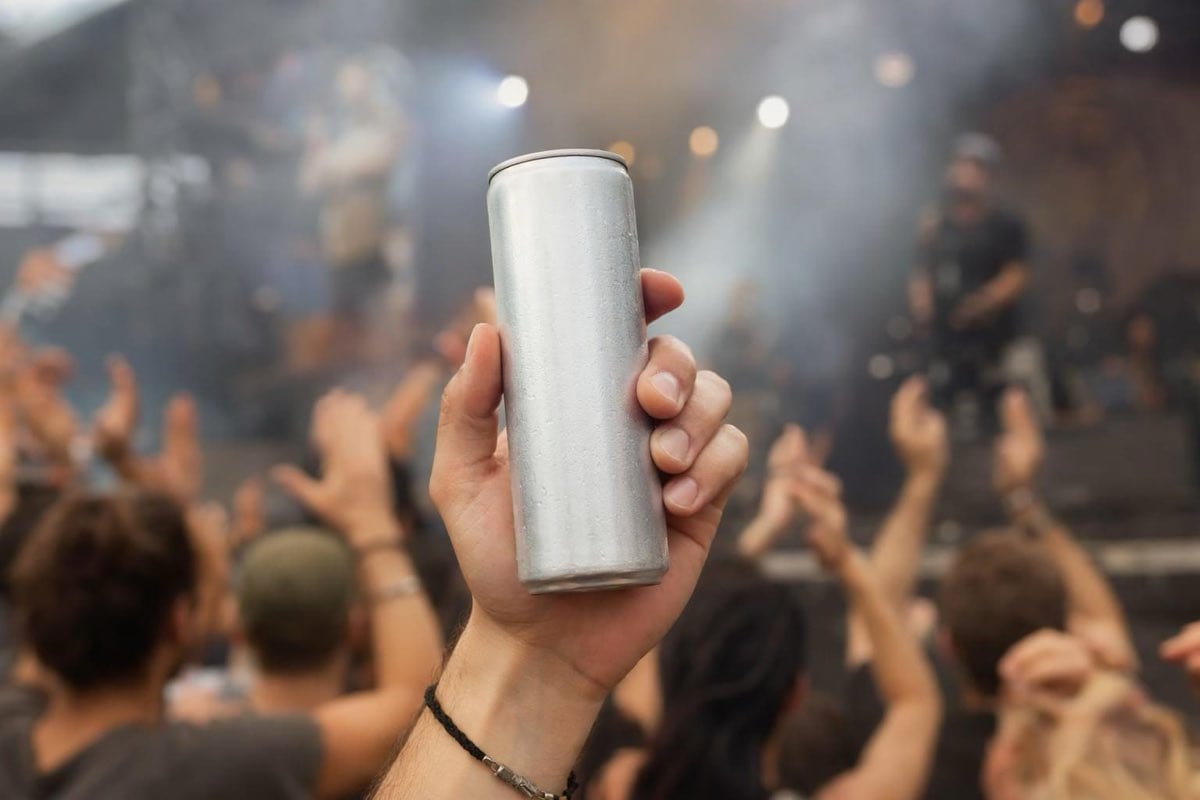
Frame 1 : Show the can in an unexpected context. A can on a concert stage. A can in a coffin. A can being shotgunned by a skateboarder. The unexpected context is the visual hook.
Frame 2 : Apply the category's language sarcastically. Their "Murder Your Thirst" slogan sounds like a wellness claim ("Hydrate Your Soul") run through a death-metal filter. Their YouTube series "Greatest Hates" compiles real negative reviews of their water and sets them to metal music. This sarcastic adoption of wellness/marketing language is always the second beat.
Frame 3 : No hard sell. Almost no Liquid Death creative ends with a price-and-buy-now CTA. It ends with the brand mark and a URL. This is a brand campaign structure, not a direct response structure. They rely on awareness and culture to drive purchase.
Why the Aluminum Can Was the Right Product Decision
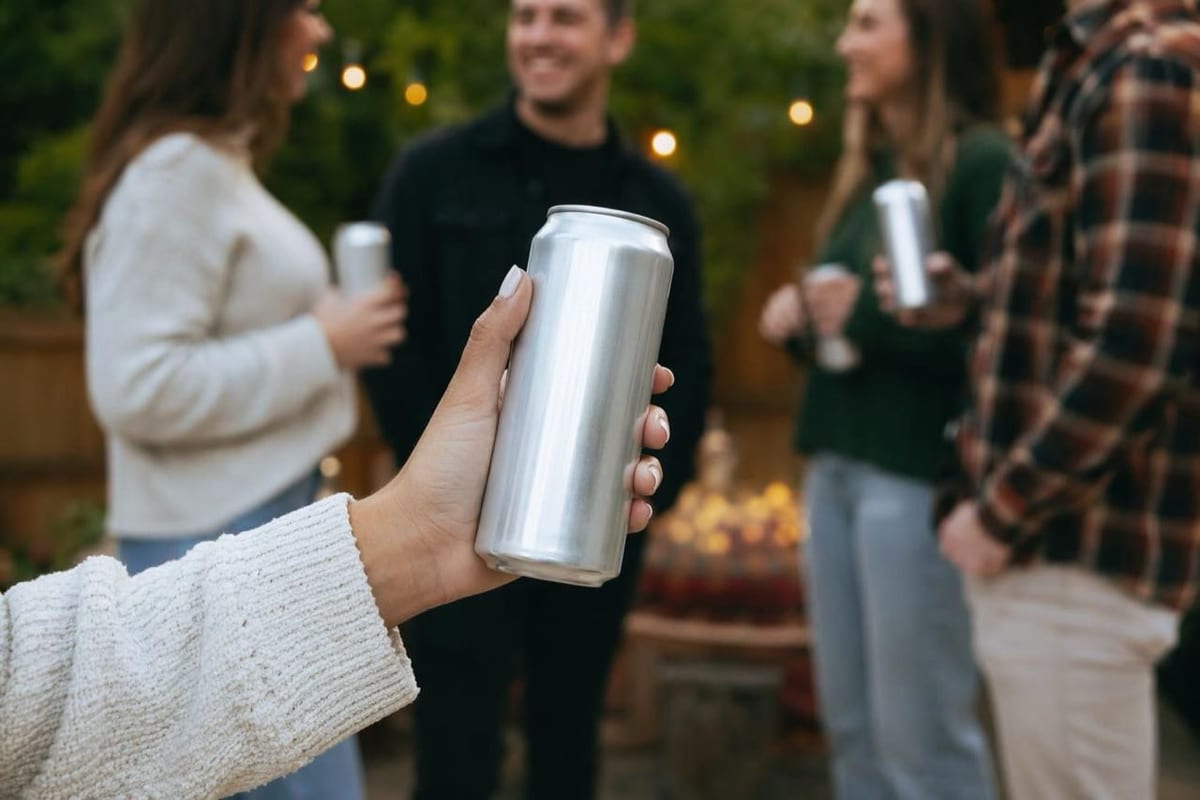
The can is not just packaging. It is part of the creative strategy.
Aluminum is infinitely recyclable, which gave Liquid Death a genuine environmental story ("Death to Plastic") that was not performative. Cans look like beer, which means Liquid Death is the only water brand that fits aesthetically at a concert, a backyard party, or a bar : venues where the wellness water bottle looks conspicuous.
The can solved a social signaling problem. People didn't want to signal "I'm not drinking alcohol" at a party. A Liquid Death can lets you hold what looks like a beer and maintain your social identity. That's a product insight, not just a design choice.
What Performance Marketers Can Learn From This
Liquid Death is primarily a brand campaign playbook, not a direct response playbook. But several mechanics apply to paid ads.
Use your creative to define who is NOT your customer. Liquid Death's aesthetic actively repels people who love wellness culture. That repulsion is intentional: if everyone likes your brand, no one loves it. Pick your tribe by choosing your aesthetic's enemies.
Reject one convention from your category in every piece of creative. Water brands use serene photography. Liquid Death uses skulls. What convention in your category do your best customers privately find annoying? Lead with rejecting it.
Let humor serve a function, not a vibe. Every Liquid Death joke either targets wellness-marketing hypocrisy or dramatizes the brand's commitment to its own bit. Random humor that doesn't connect to the brand positioning won't build anything over time.
How to Apply This Without a Cult Brand Budget
You don't need a $700M valuation to use category rejection. You need to identify the conventions your target customer finds most irritating in your category, then visually and verbally position against them.
- List the top three creative conventions in your product category (clean white backgrounds, celebrity testimonials, before-and-after comparisons, etc.).
- Ask which one your most loyal customers would describe as annoying, fake, or exhausting if they were being honest.
- Build one ad that explicitly rejects that convention. Not in a random way : in a way that connects to something real about your product.
- Make the rejection visible in frame one, not buried in body copy.
Frequently Asked Questions
What is Liquid Death's marketing strategy?
Liquid Death positions against wellness-brand conventions by using heavy metal aesthetics, dark humor, and anti-marketing language. Founder Mike Cessario has described the strategy in interviews with Forbes and others as designing the brand for entertainment first, product second : knowing the joke would generate media coverage that supplements paid advertising.
How did Liquid Death grow so fast?
Strong organic social, strategic influencer partnerships with counterculture athletes (Tony Hawk, Travis Barker), a distinctive enough look to generate earned media, and a genuine sustainability story (aluminum recyclability). Revenue and valuation milestones are documented in TechCrunch's 2022 Series D coverage.
Can a direct response advertiser use brand humor effectively?
Yes, when the humor is attached to a clear offer and not in place of one. Liquid Death uses humor at the brand-awareness level. For DR ads on Meta or Reels, pair the joke with a specific offer, a price, or a call to action. The humor gets the watch time; the offer gets the click.
Is the "category rejection" positioning strategy risky?
It can narrow your addressable audience in exchange for higher loyalty within that audience. For commoditized categories with low switching costs (water, supplements, cleaning products), narrowing to a specific psychographic and dominating it tends to be more profitable than trying to appeal to everyone.
Browse more brand and ad breakdowns in the teardowns library. If you're working on hooks and creative angles for your own brand, the free AI ad copy generator is a good place to start.
The AI Ad-Making Kit
$99Make hyperreal AI video and image ads for any brand, with free AI tools. No camera, no agency.
- 10 modules
- 300+ hooks
- 500+ prompts
Canva ad templates, free.
Proven D2C ad layouts. Swap in your product, export, launch.
Browse templates →Want to act on what you just read?
Browse 3,400+ free, Canva-ready ad templates sorted by industry. One click to open, five minutes to customise.
Browse Free Templates