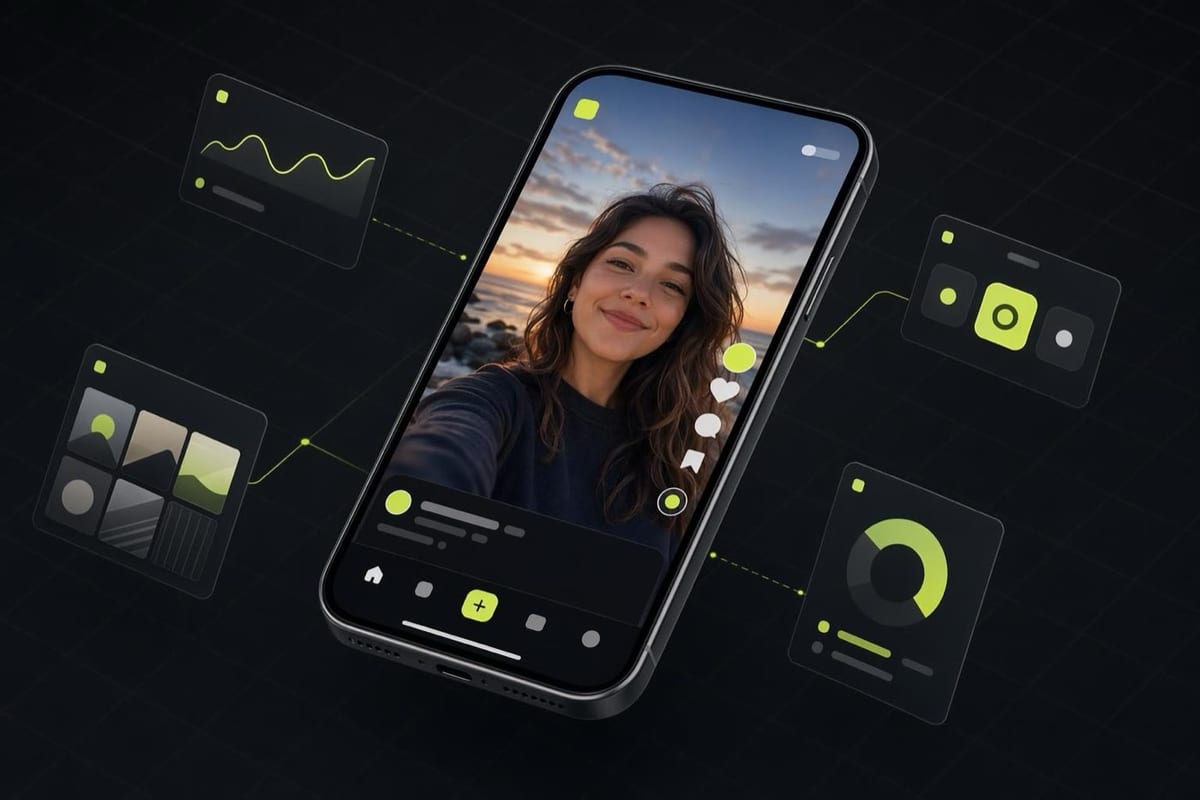
UGC ads are paid ads built from content that looks like it was made by a real person, not a brand. That person might be an actual customer who filmed themselves using your product, or it might be a paid creator who makes content styled to look organic. Either way, the defining quality is the same: it feels like something you would scroll past in a friend's feed, not a brand's feed.
That distinction matters because it is the reason the format works.
What Counts as UGC in an Ad Context
The term is used loosely, so it helps to be specific. In a paid ad context, UGC typically means one of three things:
True customer content. A buyer films themselves opening a package, reviewing a product, or showing a result. The brand asks permission, collects the raw file, and runs it as an ad. No script, no studio, no professional equipment.
Creator-made UGC. A paid creator shoots content that mimics the aesthetic of customer content: handheld phone camera, casual lighting, direct-to-camera delivery, no brand kit in sight. The brand gets usage rights and promotes it as a paid ad, usually with a "Spark ad" or boosted post on the creator's handle.
Stitched or testimonial UGC. Multiple customer clips or quotes cut together into a single video, often with captions and a voiceover. This is the format behind many of the "100+ five-star reviews" style ads.
All three versions share the same visual language: lo-fi, personal, and built around one person's honest experience.
Why It Outperforms Polished Studio Creative in Many Contexts
The mechanism is attention, not aesthetics. A polished brand video signals "this is an ad" to the viewer's brain in the first half-second, and the brain has learned to route past it. Content that looks like a peer review, a product haul, or a casual recommendation does not trigger the same response.
Research from Nielsen on consumer trust, cited in Meta's own creative guidance at facebook.com/business/learn/lessons/ugc-advertising, has consistently found that people trust recommendations from others over branded messaging. The ad is borrowing that trust by wearing the same aesthetic as the recommendation.
There is also a relevance signal. UGC from a creator in a specific niche, talking to a specific audience, naturally carries the context that audience expects. A fitness creator talking to runners looks and sounds different from a beauty creator talking to skincare enthusiasts, even if they are promoting the same brand.
When to Use It
UGC is most effective in the middle and bottom of the funnel, where the person already knows what the product category is and needs social proof before buying. It is the format that answers "but does it actually work for someone like me?"
It also works well in cold traffic when your target audience is heavy social media users who are already conditioned to watch and trust creator content. For audiences who are less platform-native, a more direct product demo or offer-led creative may be a better starting point.
Specs for Running UGC as a Paid Ad

UGC ads on Meta typically run as video or image ads using the standard feed specs. For vertical video (which most creator-made UGC is shot in), the key specs from facebook.com/business/ads-guide are:
- Ratio: 9:16 for Stories/Reels; 4:5 for vertical Feed
- Resolution: 1080 x 1920 (Stories/Reels) or 1080 x 1350 (vertical Feed)
- Max file size: 4 GB
- Recommended length: 15-60 seconds for Reels; up to 240 minutes for Feed (though 15-90 seconds is where most results cluster)
- Captions: strongly recommended since most video is watched without sound
Always check the current spec at facebook.com/business/ads-guide before building, as Meta updates placements regularly.
A Real-World Use Case
A supplement brand collects 10-second phone-filmed reviews from customers via email after purchase. They select the four best, ask for usage rights, cut each into a standalone ad with captions, and test them against one polished 30-second brand video in the same cold traffic campaign.
The UGC clips cost almost nothing to produce. If even two of the four outperform the studio video on cost-per-click and hook rate, the brand has a winner and a creative thesis to build on: which type of person, which pain point, which result resonates with this audience.
Frequently Asked Questions
Do I need permission to use a customer's video in an ad?
Yes, always. Running someone's content as a paid ad without explicit written permission creates legal risk. The simplest approach is a brief email or DM that outlines what you plan to use it for and gets a clear yes. Many brands build permission language into their post-purchase review request flow.
What is the difference between UGC ads and influencer ads?
The lines blur, but a useful distinction is scale and nature of the relationship. Influencer ads involve a person with an established audience promoting to that audience, often in a disclosed paid partnership. UGC ads are about the content style, not the person's follower count. A creator with 500 followers can make high-performing UGC; a creator with 500,000 followers running a traditional sponsored post is doing influencer marketing. The key question is: does it look like a real person's recommendation, or does it look like a partnership announcement?
How long should a UGC ad be?
Hook the viewer in the first 3 seconds, make the core claim in the first 10 seconds, and let the rest of the run time carry proof (results, reviews, more use cases). For Reels and Shorts, 15-45 seconds is where most brands find the best hook-rate-to-completion ratio. For Feed, you have more time, but most watch-time drops off sharply after 60 seconds on non-TV placements.
The AI Ad-Making Kit
$99Make hyperreal AI video and image ads for any brand, with free AI tools. No camera, no agency.
- 10 modules
- 300+ hooks
- 500+ prompts
Canva ad templates, free.
Proven D2C ad layouts. Swap in your product, export, launch.
Browse templates →Want to act on what you just read?
Browse 3,400+ free, Canva-ready ad templates sorted by industry. One click to open, five minutes to customise.
Browse Free Templates