Most marketers treat ad creation as guesswork — toss a headline at the wall and pray for clicks. But the difference between a winning ad and a wasted budget often comes down to a 25% swing in click-through rate. That gap is entirely bridgeable with the right process.
This guide breaks down a repeatable system for writing ad copy and designing creatives that perform — whether you're running campaigns on Meta, Google, or LinkedIn.
Start With Awareness, Not Features

Before writing a single word of copy, you need to understand where your audience sits on the Ladder of Product Awareness (LPA). This five-level framework determines everything about your messaging:
Level 1 — Unaware: They don't know they have a problem. Your job is education, not selling.
Level 2 — Problem-Aware: They feel the pain but haven't explored solutions. Lead with empathy and problem articulation.
Level 3 — Solution-Aware: They know solutions exist but haven't found yours. Differentiate aggressively.
Level 4 — Product-Aware: They know your product but aren't convinced. Deploy social proof and handle objections.
Level 5 — Ready to Buy: They need a nudge. Hit them with urgency and a clear CTA.
The critical mistake most advertisers make is writing Level 5 copy ("Buy now! 20% off!") for Level 2 audiences. Match your message to the awareness stage, and your conversion rates will climb immediately.
The Channel Determines the Approach
Not all ad platforms work the same way, and this matters for your copy strategy.
Behavioral targeting platforms (Google Ads, YouTube, Pinterest) let you intercept people based on what they're actively searching. Someone searching "best running shoes for flat feet" is already high on the awareness ladder. Your copy should be specific, detailed, and solution-focused.
Profile-based platforms (Facebook, Instagram, LinkedIn) target people based on who they are, not what they're searching. These audiences are typically lower on the awareness ladder, so your copy needs to work harder to establish relevance and create desire.
Four Copywriting Frameworks That Work

Once you've mapped your audience's awareness level, pick the framework that fits:
1. Problem → Solution → Benefit
Articulate why the problem is worth solving now, why your solution beats alternatives, and what specific outcome the reader gets. This is your workhorse framework — it works at nearly every awareness level.
2. Differentiation-Led
Lead with what makes you the only option. Are you the fastest? The cheapest? Using proprietary technology? The strongest ads answer one question: "Why you and not them?"
3. Question-Based
Open with a pressing question that makes your audience realize they need what you sell. "Still spending 4 hours a week on invoicing?" works because it forces self-identification.
4. Value Prop Matching
List every product benefit alongside every audience concern, then create a pitch for each pair. This framework generates the most ad variations and is ideal for systematic testing.
Making Copy Hit Harder
Good frameworks produce decent copy. These techniques make it compelling:
Lead with impact, not setup. Your first line is your only shot. Don't waste it on context — open with the sharpest benefit or the most painful problem.
Cut ruthlessly. Every unnecessary word dilutes your message. If a sentence works without an adjective, delete the adjective.
Use psychology intentionally. Loss aversion ("Don't miss out") outperforms gain framing ("Get access") in most contexts. Social proof ("Join 50,000 marketers") reduces friction. The framing effect means how you present information changes how people perceive it — "95% success rate" lands differently than "5% failure rate."
Common errors to avoid: vague value props ("We help businesses grow" says nothing), failing to twist the knife on the problem, and disjointed sentences that break the reader's flow.
Designing Creative That Doesn't Look Like an Ad

Visual creative follows four principles:
1. Show the product in action
Don't tell people what it does — show the transformation. Before-and-after, screen recordings, real usage scenarios.
2. Say what it is
Clever creative that confuses people is worse than boring creative that communicates clearly. Clarity beats cleverness every time.
3. Every element earns its place
No decorative gradients, no stock photo padding. If a visual element doesn't reinforce the value proposition, remove it.
4. Match the platform aesthetic
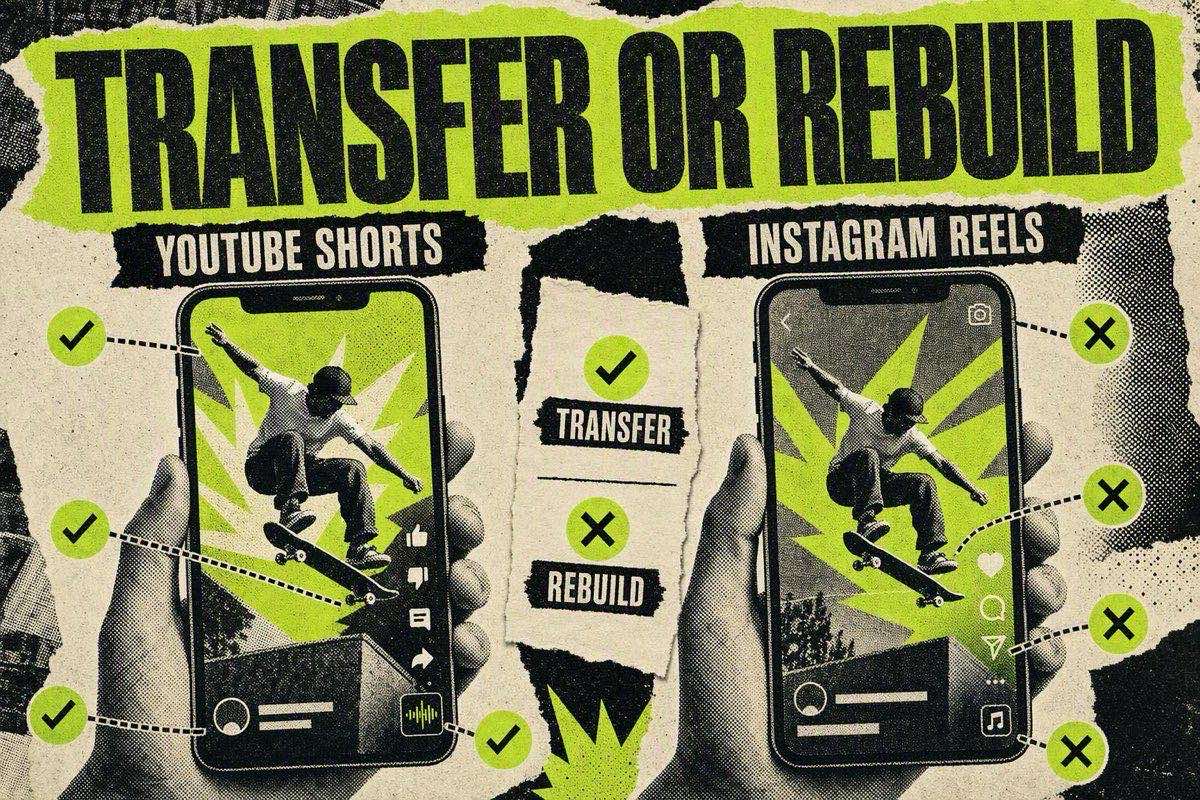
A Facebook feed ad should feel like it belongs in the feed. An Instagram Story ad should look like a Story, not a billboard. The less your creative triggers the viewer's "this is an ad" reflex, the more attention it captures.
Putting It All Together
The highest-performing advertisers don't rely on creative instinct. They follow a system: map the audience's awareness level, choose the right framework for the platform, write copy that leads with impact, and design creative that blends into the feed.
Then they test relentlessly, kill underperformers fast, and double down on what the data says works. The 25% CTR difference between a good ad and a great one isn't talent — it's process.
The AI Ad-Making Kit
$99Make hyperreal AI video and image ads for any brand, with free AI tools. No camera, no agency.
- 10 modules
- 300+ hooks
- 500+ prompts
Canva ad templates, free.
Proven D2C ad layouts. Swap in your product, export, launch.
Browse templates →Want to act on what you just read?
Browse 3,400+ free, Canva-ready ad templates sorted by industry. One click to open, five minutes to customise.
Browse Free Templates